

Watch Out for the Petextrians
By Mike Martin
Some days I think it might be safer to walk on the street with the traffic than try and navigate my way along the sidewalk. Once all I had to put up with was annoying people listening to music that was so loud it bled through their headphones or some irritating phone conversation that really should have been held in private. Now I have to watch out for predatory texters who are oblivious to all except their tiny keypads.
Not Looking
They don’t look up. They don’t look around. They just bump into you, telephone poles, fire hydrants and even cars when they walk/run into the intersection. I even saw one girl, headphones on, singing loudly, stroll right into the side of a city bus. She didn’t even seem to notice that it was a bus. She still didn’t look up but mumbled ‘sorry’ and went around the bus and on her merry way. Amazing, but not that unusual.
Surveys
Now we hear, courtesy of The Wall Street Journal about a survey of over eleven hundred people in Seattle, Washington, that people who walk and text (I’m calling them petextrians) are four times more likely to fail to look both ways before crossing the street, fail to follow traffic signals or cross in the middle of an intersection. We now have laws that ban texting while driving. Maybe it’s time to do the same while walking.
Statistics
There are no statistics yet on injuries an accidents caused by petextrians but walk down any busy street at lunch time if you want to see the potential for mishap. So far the damage has been mostly limited to bruised heads and bruised egos but it surely cannot be too long before the carnage will be upon us. So on behalf of PATU (Pedestrians Against Text Abuse) please don’t text and walk this noon.
Mike Martin is a freelance writer and workplace wellness consultant. He is also an author of Change the Things You Can: Dealing with Difficult People.
He is also the author of the Sgt. Windflower Mysteries. The next book in the series, The Body on the T, will be released by Baico Publishing on May 1, 2013

Greetings, folks. I am pleased to announce that I have a new gig and will be writing a bi-weekly column for Work Awesome.
Here’s what they say about themselves:
Work Awesome is a resource for people who love what they do, and want to become awesome at it.
This is a blog for people who want to be awesome at work, and for people who want to be awesome at what they’re passionate about. Whether it’s the music you’re making in your home studio or the freelance business you’ve always wanted to start, we can help.
We share useful articles about starting things, completing things, and trying new things—and being “awesomely productive” when doing so.
Check them out at http://workawesome.com/
I will cross-post here. My first article will be live on Friday March 22, 2013
Mike Martin is a freelance writer and workplace wellness consultant. He is also an author of Change the Things You Can: Dealing with Difficult People.
He is also the author of the Sgt. Windflower Mysteries. The next book in the series, The Body on the T, will be released by Baico Publishing on May 1, 2013

When I first started work, and yes the dinosaurs still roamed the earth, the workplace was kind of like a church, quiet and peaceful. The idea was to create a space where people could focus on their tasks without too many interruptions. Music, except for some piped-in Muzak, was frowned upon and even the radio was usually off-bounds. The only sounds that could be heard would be the telephone from the next office or cubicle, but those conversations were usually brief and muted.
Noise
Today I am still shocked by the noise levels and constant distractions of the modern workplace. There are phones that don’t just ring, they jingle, jangle, jive and hip-hop. Conversations are as loud and animated as the ring tones and without any real sound barriers every conversation seems to be in competition with each other. And if the aural distractions weren’t enough the whole office also looks like it’s in perpetual motion. People are coming and going to and from meetings all the time.
E-mails and Texts
And even within what used to be your oasis, your inner sanctum there is no rest from the distractions. E-mails and text messages have not replaced regular correspondence or communication they have obliterated it. Electronic messaging has now become the ‘work’ that people do when they come to work and every time that e-mail beeps a worker has to, just has to, respond.
Interruptions
Here’s some data to chew on, when you have time, probably after work. Today an average worker, according to The Wall Street Journal, may spend up to half of their day just reading and responding to e-mails. And on average, according to research by Stanford University, they are interrupted every 3 minutes. This same research says that it takes up to 23 minutes for a worker to return to their original task.
As I was just saying… what was I saying again?
Mike Martin is a freelance writer and workplace wellness consultant. He is the author of Change the Things You Can: Dealing with Difficult People.
He is also the author of the Windflower Mystery series. His new book The Body on the T will be out on May 1, 2013.
This post first appeared on http://www.jobs.ca

If you had the power to implement 2 suggestions that could automatically save lives would you do it? Before you say yes you better prepare yourself for an avalanche of backlash. Are you ready? Because what I am going to say is going to be almost uniformly unpopular with many of you, maybe even all of us. But just because we don’t like it doesn’t mean it doesn’t make sense.
The 2 ways are to raise the drinking age to 25 and to stop allowing people over 80 to drive motor vehicles. Are you still prepared to act?
I won’t try and bamboozle you with facts because I don’t need it. The people who really determine the odds of living and dying are not in the medical profession, they are in the insurance business. And they say that the greatest risks for accident and accidental death, with or without a motor vehicle are those under 25, particularly males, and those over 75. Not only do they say that but they act for your money upfront to prove it if you are in one of these categories.
The case for raising the drinking age is simple. Young people drink, they drive, and they die. Not only that but they kill other young people. And they kill older people. They are not the only ones doing this but proportionally their stats are way out of whack. Young people also tend to drink excessively, binge drink (both males and females) and do really stupid things while drunk. Things like rape and sexual assault and sometimes they kill themselves and others accidentally without even getting behind the wheel of a car.
Somehow this type of drinking is glamourized and dressed up like some kind of bullshit coming of age when really it is a dangerous and deadly practice. One that we could postpone, at least until they were a little older and hopefully a little wiser. I just ask you this. If it was your son or daughter what would you prefer?
The case for withdrawing the privilege of driving a motor vehicle from people over 80 is also a very simple one. After age 60 or so all of us start losing a little bit of our physical and mental capacities in some way, some faster and some slower than others. These include our hearing and eyesight which can fortunately be supported through hearing aids and glasses. But they also include our reaction times and things like our depth and space perceptions. You can keep them up a little bit through special exercise and practice but eventually time wins out.
We have also made this issue one of personal liberty and freedoms but I would point out that while the greatest danger to older drivers is certainly to themselves, all the rest of the travelling public has to be aware when they are around. We license drivers for a reason: to prove that they can drive. After 80 most of us simply do not have the capacity to drive safely. As they say in Quebec: Point Final!! Once again I would ask you a question. If it was your mom or dad would you want them out on the 401 at 80?
I realize that I may have stirred up a hornets nest with these suggestions and maybe it’s my S.A.D. kicking in or the fact that I didn’t get to Cuba this year, or maybe I am just becoming a curmudgeon before my time. In any case I offer these early March thoughts in the hopes of provoking a discussion and I’d love to hear your ideas. (Please be gentle!!)
Mike Martin is a freelance writer and author of Change the Things You Can: Dealing with Difficult People.
He is also the author of The Walker on the Cape, a Sgt. Windflower mystery.

I always thought that technology would lead to some form of emancipation in the workplace and to a great degree that is true. Many workers now have the opportunity to work from home or from anywhere that they like that has a high speed Internet connection. But there is a disturbing development on the telework front that has shaken many of us who have been pushing for more control (and thereby less stress) in worker’s lives.
It comes in the form of a leaked internal memo from Yahoo’s head of Human Resources directing all employees who are currently working from home to start working from a company office in June of this year. No discussion, no debate, no dialogue. I thought this was Yahoo.. not Nike!! I don’t know what the internal discussions were like or what the reasons were for this management decision but it flies in the face of so many things that it’s hard to know where to begin.
Let’s give it a try anyway. This decision is wrong in spirit, content and delivery. In spirit it moves workers back a few steps in evolution and enforces a top-down hierarchy that only works in the papacy and the military. In content it costs everybody more money, wastes tons of fuel and energy and takes up space that could be used for almost any other good purpose. In delivery it just sucks. Take it or leave it to me is not a choice. I would leave and so will many Yahoo employees.
Finally this decision comes under the regime of CEO Marissa Mayer who Bloomberg News reported today had a nursery built near her office last year so that she could be closer to her newborn son. Now she paid for the facility with her own money but she could afford to. Who else could do that? Not the thousands of Yahoo workers who now have to scramble to find daycare and arrange for transportation to obey her edict.
Yahoo is still swimming against the tide of telework and mostly because companies and employers have figured out that is much cheaper to let their staff work from home than to bring them into the office. But that doesn’t mean that Yahoo isn’t wrong. Again. There’s a reason why Google is more successful that its older cousin. Yahoo might want to check out their campus.
Mike Martin is a freelance writer and author of The Walker on the Cape, a Sgt. Windflower mystery.
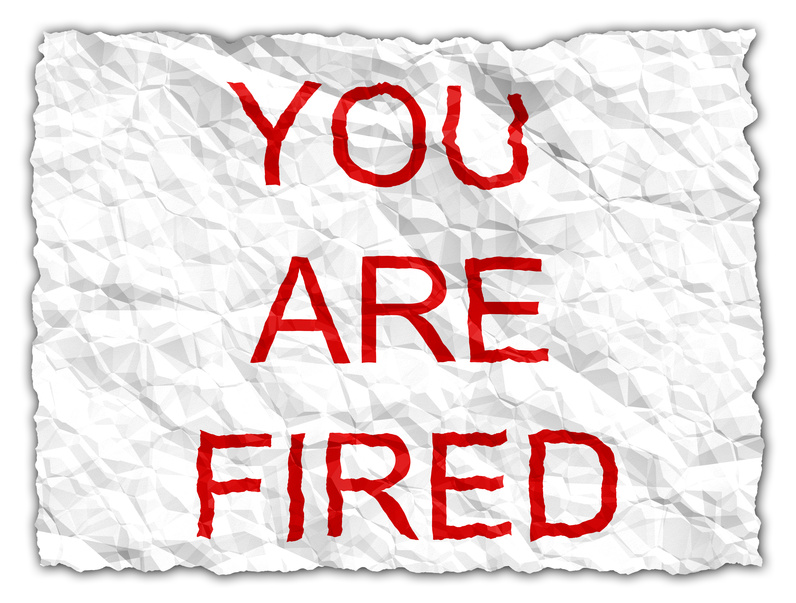
One of the most unpleasant tasks of any manager is to have to fire someone. It doesn’t really matter if the person deserved it or not or what the circumstances are, it almost always sucks. That’s why most of us are not very good at it and because of that we often make it harder on ourselves and the unfortunate person who is going to get the axe.
There may not be any good way to tell someone that their services are no longer required but there are certainly some things that we should never do. So here are some of the Don’ts of Firing.
Don’t Wait
It doesn’t help them or you to postpone the inevitable. If you know that a person must go, and this is usually after repeated attempts to correct behaviour, then cut the suspense and just do it. By now they have figured out that they are not going to make it and they probably feel like a mouse with their tail in a mousetrap. Put them and everybody else out of the pain.
Don’t Say You’re Sorry
Unless you have made a mistake in hiring them in the first place, then don’t apologize for letting them go. Give them the reasons: wrong fit, attendance, problems getting along… whatever made you come to this conclusion. And tell them the truth. If you have to make something up then you should be fired, not them.
Don’t Drag it Out
Go in with a prepared script, give them a chance to respond, and then stand up and shake their hand and say goodbye. You don’t have to debate your decision, you are the boss. You don’t have to answer any questions that you feel uncomfortable with. You have the right to remain silent and anything you do say can and likely will be held against you.
Don’t Let Someone Else Do Your Dirty Work
You are the manager and it is your job to hire and fire. That’s why they pay you the big bucks!! Don’t shuffle this unpleasant task off to a supervisor. Man or woman up and take responsibility for your decisions. It may get any easier to fire someone but you can get better at it.
This post first appeared on my blog at www.jobs.ca
Mike Martin is a freelance writer and author. His book Change the Things You Can: Dealing with Difficult people is a valuable resource for manager, supervisors and anyone who wants to get along in the workplace.
He is also the author of The Walker on the Cape, a Sgt. Windflower mystery.

Sometimes science catches up. We have all known that we would be better off if only we could get a couple of hours more shut-eye. Now science has confirmed it. Researchers from the Harvard Medical School have found out that not only is getting too little sleep bad for us, but it hurts the bottom line as well. According to the Wall Street Journal business, particularly big business like Proctor and Gamble Co. and uber investment bankers Goldman Sachs Group are taking this problem very seriously.
How seriously? Well for starters they are investing big bucks in slumber training courses and providing melatonin-regulating lights to their employees so that they can get the best possible sleep possible. Proctor and Gamble is working with a sleep expert to create a pilot project that is going to work with shift workers, including some at a plant in Belleville, Ontario to help them get better rest, and the company hopes, to be more productive.
The reason for all this attention to a good night’s sleep is that these companies have found that it is directly affecting productivity in their operations. The Harvard study is just a confirmation of what people already knew: if you are tired you work less efficiently, become easily distracted and are more likely to both work unsafely and make mistakes. And we are talking big bucks here! The Harvard researchers pegged the cost of sleep deprivation at $63 billion a year in the United States every single year.
So the next time you hear that incessant ringing in the morning don’t jump out of bed. Just roll over and catch a bit more sack time. And if your boss asks you why you’re late just tell him that you are trying to improve production on the line.
Mike Martin is a freelance writer and workplace wellness consultant and the author of Change the Things You Can: Dealing with Difficult People.
He is also the author of The Walker on the Cape, a Sgt. Windflower mystery.

The law is still being written in Canada about the extent of an employee’s right to electronic privacy, particularly when they are using the employer’s equipment or facilities. As these rights are being debated in various courtrooms across the country there are a couple of things that everybody, employees and employers should know.
No Guarantee
First of all there is no guarantee of employee privacy at work. In fact the Privacy Commissioner of Canada says that it is okay for employers to collect personal information as long as they can demonstrate a “need to know” in regards to this information. And, “Employers can balance their “need to know” with their employees’ right to privacy, if they ensure that they collect, use, and disclose personal information about their employees for appropriate purposes only.”
Collecting Information
Another question to consider is “how” they collect this information? It would seem to be fair game for employers to know about information that employees voluntarily disclose in their hiring interviews or during performance appraisals. And other information that would naturally come to light such as medical conditions that require time off from work or personal problems that employees self-identify.
Planned or Accidental
But what about information that an employer gets from either planned or accidental sources such as surveillance cameras or by other forms of snooping. First of all it is not normally illegal for an employer to use a private investigator or surveillance to check up on an employee who claims to be sick. They can’t film a person inside their house but if they see them at the mall it’s fair game.
CCTV
Surveillance cameras at work are also both commonplace and perfectly legal, as long as the employer has a good reason to install the equipment, such as security or protection of property. But employers have to be careful not to target ‘innocent’ employees in their attempt to protect their interests and it always better to inform employees if there are security cameras within their areas of work.
The Bottom Line
The bottom line on electronic surveillance is that employers can almost always get away with it if they have can demonstrate a suspicion of stealing, lying or defrauding the organization. But they have to be careful not to overstep their bounds into the personal lives of their staff or face legal challenges and consequences later.
If you are an employee or employer with concerns in this area please get your own legal advice. And be careful. You never know who might be watching.
This post first appeared on my blog at www.jobs.ca
Mike Martin is a freelance writer and the author of The Walker on the Cape, a Sgt. Windflower mystery.

