

There are many things that bug me at work including whiners and constant complainers and critics. I also hate people who don’t know proper meeting etiquette. You know, the ones who arrive unfashionably late and leave early and then spend their few precious moments with us on their Crackberry. Or the others who suck the life out of meetings by dominating the discussion and debating every single issue on the table, just for spite, it seems. Hate is a strong word, but they are getting close.
I actually save my greatest disdain for those people at work who offend my senses, particularly my nose and my ears. I can react a little strongly to those who offend my sight as well, but since I am not particularly well-dressed myself I can let a lot of that go. I only draw the line at clothing that is too tight or provocative for daily office use. We are not trying to get picked up here, people. And as someone once said about spandex, which is never appropriate at work except for life guards, you can stuff it in but it is going to come out somewhere.
Fashion failures aside most of my pet peeves at work usually relate to people who try and spread their lifestyle over mine at work. Perfume and cologne are great but not in close quarters and I welcome the trend to scent free workplaces. I am not allergic, just easily offended. But what really irks me is what other people bring to work to eat in common areas or re-heat in the microwave. I won’t list everything but fish of any kind is the worst offender and while that first whiff of microwave popcorn smells divine, the fake butter makes the air rancid a few minutes later. Remember we are stuck in this place together for 8 hours a day!!
I also reserve special distaste for people who have not realized that we work in an open concept office environment. We have no walls any more to protect us from your screaming matches with your 12 year old who got picked up by the police, again. We also left the 70’s years ago and if we want to listen to classic rock we can take out our 8 track from the basement. Finally please stop eating those nuts and cruncheroos before I come over there and…. You get the picture.
I realize that everyone is not perfect, even me. But can we please make an effort? Please????
This post originally appeared on my blog at www.jobs.ca
Mike Martin is an Ottawa freelance writer and author of The Walker on the Cape. For more information please visit www.walkeronthecape.com

One of the best things about writing a book is to have others read it and talk about it. Some people who have read The Walker on the Cape have sent me their comments about the book. I am very grateful to all those who have written so far. Please continue to do so.
Here are some of the readers comments from www.walkeronthecape.com
Readers Comments
“The Walker on the Cape is a great read. I love the way that the ocean and the fog are almost characters in the story. Once I picked it up I couldn’t put it down until I finished. Congratulations on a great story.”
Andrew Redmond
Ottawa, Ontario
………………..
From the first to the last page I was taken into the story of Winston Windflower. The case of the Walker on the Cape keeps you guessing until the last page. Along the way you get to meet the people in Windflower’s life and you get a glimpse of the community he has settled in. A really good read.
Marilyn Martin
Burin, NL
………………..
I really enjoyed the book. I could not put it down until it was read. The development of the main character was well done as was the use of the weather to set the mood of the story. It could easily be turned into a play.
Doug Richardson
Grand Bank, NL
………………..
This book is a great Canadian read, as comforting as beef stew on a cold winter night. There’s a sweetness and charm that makes the book very personal and I can’t wait for the next one. Fabulous work.
Lorraine Eggens
South Mountain, Ontario
………………..
I just finished reading “The Walker on the Cape”. It was a pleasure to read. I sure hope we will hear more from Sgt Winston Windflower.
Deborah Ann Blum
Ottawa, Ontario

I guess I always knew that it really was better to give than to receive but recently I have been reminded yet again of the power of this simple action. When I published my second book, “The Walker on theCape”, my first full book of fiction I was a little fearful of what the reaction would be for this work in the great wide world. This was a stretch for me. I have been comfortably writing about work and workplaces for the last fifteen years and I had already published a self-help book on this topic which was generally well-received.
I had written a few short stories, mostly for myself that I shared with family and a couple of close friends but now I was out there in a genre, mystery and crime, that had many, many excellent writers, and just as many ardent critics. I feared that my work wouldn’t be seen as worthy to share the same bookshelves as these other authors, and that readers would see me as a fraud or a charlatan. With the active support of my life partner and children I finally took the plunge, got a publisher and set my little paper boat off on its voyage.
Having been through the publishing process once I at least knew the ropes and where to submit my work to try and get attention but something inside of me suggested a different approach that trying to cajole a handful of influential editors and reviewers to recommend my book. I would still do that but in addition it came to me that I should give my book away. Not all of the copies, obviously, my family and I still had to eat, but to give away copies of “The Walker on theCape” to a number of people without asking a lot in return.
So when my book came out I decided to purchase an extra 100 copies of my book at the discounted author’s price and to give them away. 25 copies to the usual suspects of book reviewers and editors as usual, but the other 75 I decided to give to friends, family and even to some strangers. To this second 75 I asked only that they read the book. If they liked it they could tell me. If they really liked it they could buy another copy and give it as a gift to a friend.
The most interesting thing that happened next was the reaction of the “non-business” people who received the book. My family were of course grateful to receive the book without a lot of conditions and pleadings to buy as many copies as possible. My friends, some of whom I had not seen in a long time were happy to receive the book and almost every single one contacted me to tell me that. Many of them immediately bought another copy and one person bought five so that he could repeat the magical experience with five others.
The hardest books to give away were the ones that I set aside to give people who I knew could not afford to buy them. Many did not want to admit this and I respect that. I was just trying to give a gift and perhaps they were not used to that in their day to day lives. I have decided to give the last few copies I have left to local libraries whom I’m hoping can make them available and free to more members of the public.
All in all this is and was a fabulous experience. Out of a small decision that I do not take credit for coming up with I have received smiles, thank you’s, encouragement and love. No amount of money could have bought this and it came about just because I decided to give something away. It truly is better to give than to receive.
Mike Martin is the author of “The Walker on the Cape” published by Baico Publishing. For more information please visit www.walkeronthecape.com

For the last ten years I have been working with a number of workplace experts (former managers and union leaders, current coaches and mentors) to try and build better workplace relationships. We have chosen to focus on unionized workplaces and the relationship between employers and their union representatives to see if we can improve their relationships and as a result lead to improved overall communication and increased overall trust and respect in the workplace.
The good news is that we have had some success. The bad news is that there is so much more work to do in this area. As a “posimist”, I try to be both optimistic and positive and I would much rather focus on our collective successes and what contributed to this success. So here are a couple of key elements that I have observed in these ten years of work.
No Bad Interventions
By the time that we get called into the workplace things are usually in pretty bad shape. But that’s okay because like the old story about “Ottawa”… we’re here to help. It would have been better to call us earlier but we start from the point of contact. Once we get involved, or even once management decides to act to get more help, things start to improve. There are no bad interventions in building workplace relationships and it’s never too late to start.
It Starts (and Ends) At the Top
A few years ago I was at a briefing session for the senior manager of an organization just before a special meeting with the union to start the discussions about building a better relationship. Some of the managers were grumbling that this was a waste of time and that the union didn’t really represent anybody and they were too difficult to deal with and so on. Finally the CEO stood up and asked would it better or worse for our bottom line to have a good working relationship with the union? Case closed. Senior managers have to lead the process, every process to build better relationships at work.
Start Small to Make Big Changes
Sometimes the problems seem so big and old and the people are so entrenched that it doesn’t seem like anything is possible. That’s the time to remember the answer to another question. How do you eat an elephant? One bite at a time. If your department or workplace is not ready for major changes then start small with the ones they might be open to. If one section looks like it might want to change then why not let them go first. Give them some extra attention and resources and see where it goes. Maybe they will be successful and others will see their success and want that for themselves. Or try a small initiative system-wide and see how it goes. Start small and you just might find that maybe a year or two down the road that elephant has shrunk quite a bit.
Mike Martin is a freelance writer and workplace wellness consultant. His latest book is a mystery set in Grand Bank, Newfoundland called The Walker on the Cape

I once had a colleague who never had a good plane ride, never had a great meal, and never liked any hotel room she stayed in. Ever. I know because I heard about it the next day. The funny thing is that I was on the same plane, which was fine, ate at the same restaurant and had a very nice meal, and my hotel room was clean and comfortable. Little Miss Complaints and her counterpart and constant companion, Mr. Whiner, never met a good situation that they couldn’t make worse.
Somehow Little Miss Complaints would find the black lining in a silver cloud and if there was nothing to complain about today, there was always yesterday to pick over again. She also latched on to and even sought out other complainers to go through their miseries together. While many of us would spend late nights in hotel bars laughing about the regular misfortunes of constant travel, a small group of whiners and complainers could always be found in a quiet corner being quite content to be miserable.
Little Miss Complaints and Mr. Whiner at the office are busy reciting a whirlwind of not, or never good enough situations. The photocopier, the printer, the telephone system, the benefits, the hours, the pay, oh my God, talking about salaries was good for a complete lunch. None were satisfactory to meet their high standards or requirements. Complaints were constant and everything was up for its share of critique. The weather, diseases or ailments, including those that they were never going to get, were always at the forefront of his mind and her lips.
Worst of all was to have Little Miss Complaints or Mr. Whiner as your supervisor. Not only did you have to endure their stream of complaint consciousness but you also had the pleasure of having your work and performance reviewed by a faux perfectionist. A real perfectionist would set a standard of excellence and help you to achieve the same level. These guys offered constant criticism with no encouragement or possibility of success. The best hope is that they might envelope themselves into a cloud of self-pity and ignore you. Otherwise prepare to meet the supreme nit-picker.
(Excerpted from “Change the Things You Can: Dealing with Difficult People” by Mike Martin. Available at Chapters.ca, Amazon.com, and Booklocker.com)
www.changethethingsyoucan.wordpress.com
This post first appeared on my blog at www.jobs.ca
Mike Martin is a freelance writer and the author of The Walker on the Cape

Mike Martin has produced a very compelling police procedural set in Grand Bank on the coast of Newfoundland. From main character Winston Windflower on down, he has created a group of people that you want to get to know better; hopefully in future stories and other circumstances.
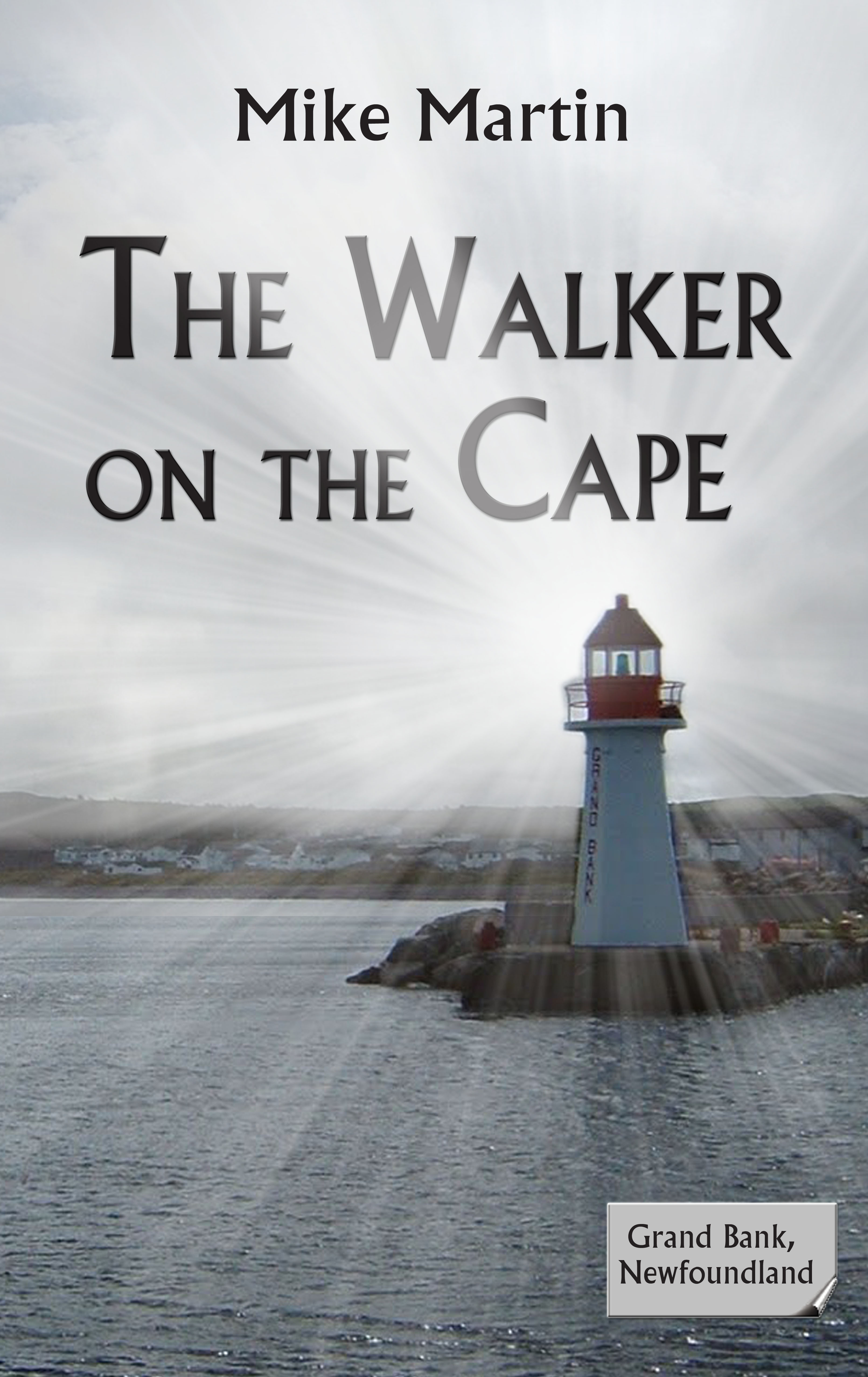
The Walker on the Cape contains a well executed plot and an ending you are not expecting; vital elements in this genre of fiction. The visual of the lighthouse on the front cover does a lot to establish the setting and Martin’s description of the locale makes it integral to the feel of the story.
I look forward to the next adventure of Windflower and company.
Michael MacDonald Ottawa, Ontario

There are many ways to get the right answer but only if you know the right question. The great scientist and futurist Carl Sagan had this to say on the subject: “We make our world significant by the courage of our questions and by the depth of our answers.”
In our everyday lives and too often in the workplace we ask the wrong question and we certainly tend to focus on quantity versus quality when it comes to asking questions. There may indeed be no “stupid” questions but there are questions that can help get closer to the truth and others which pull you far, far away.
In general there are two types of questions. There are questions that seek to learn and questions that seek to judge or get a person to lean our way in an argument or dispute. Judging and leaning questions are really looking to assign blame, defend an already held position or move another person closer to our point of view. Learning questions however are actually looking for new information and facts and sharing responsibility to resolve or improve a situation.
Another way to look at questions is to categorize them as powerful or power- draining questions. Powerful or empowering questions might be like what might best work for you in this situation or when are you most effective? Power-draining questions might be what went wrong here or how could this have happened? You can see how one set or style of questions might produce a completely different answer and result.
If you really want to improve a situation or get information that can correct a problem it is much better to ask a question in a way that allows the person to actually give you something to work with rather than retreating behind the cone of silence or even worse giving you incorrect information. Many times this means asking the question in a neutral way that shows you are not on a witch hunt. That might mean prefacing your question with a comment like “I’m not blaming anybody.. I just want to know what went wrong.” Then ask your question and watch as the tension drains from the other person’s face.
The other major thing to focus on in getting the right answer is to actually listen to the person who is trying to answer your question. We have two ears and one mouth for a reason. Ask your question as neutrally or powerfully as you can and then wait and wait and wait for the answer. Don’t ask another question while you’re waiting. Don’t try to pre-empt their answer. Sometimes people are just thinking or maybe they are trying to decide if they can trust you.
Ask the right question, in the right way, and wait for the response. You just might get the right answer.
Mike Martin is a freelance writer and workplace wellness consultant. He is also the author of the new book “The Walker on the Cape.” For more information please visit:
June 29, 2012
Baico Publishing and Mike Martin are pleased to announce the release of “The Walker on theCape”. This is the first in a series of stories featuring RCMP Sgt. Winston Windflower, a Cree from Northern Alberta who finds himself stationed in Grand Bank,Newfoundland.
Except from the back cover of “The Walker on theCape”
A man’s body is found on the Cape overlooking Grand Bank,Newfoundland. At first everyone thinks it’s a heart attack or stroke. But then it is discovered that he was poisoned. Who would do this and why? Finding that out falls to Sergeant Winston Windflower of the RCMP along with his trusted side-kick Eddie Tizzard. Along the way they discover that there are many more secrets hidden in this small community and powerful people who want to keep it that way.
Windflower also discovers two more things; a love of living in a smallNewfoundlandcommunity that is completely different from his up-bringing in a Northern Alberta reserve and maybe the love of his life. He gets a taste of Newfoundlandfood and hospitality as well as a sense of how crime and corruption can linger beneath the surface or hide in the thick blanket of fog that sometimes creeps in from the nearbyAtlantic Ocean.
Mike Martin was born inSt. John’s,Newfoundlandand now lives and writes in Ottawa. This is his first fiction book. He is a long time freelance writer and the author of “Change the Things You Can: Dealing with Difficult People.”
For more information or to obtain a review copy please contact Mike Martin at mike54martin@sympatico.ca or visit http://www.walkeronthecape.com

I remember when I was first exposed to an open concept office environment. The reaction of me and my co-workers was one of shock and dismay. How could they take away the privacy of my walls and replace them with what looked like styrofoam dividers, a fake plastic window and no ceiling above me to drown out the noise of my busy workmates? Productivity and performance will fall we warned and we were sure that if there was a sky above us it would fall as well.
Flash forward to today and no one blinks at an open office and many workers wonder exactly what they would do in their private lair. Today’s workplace is about circulating air, ideas and people and the fewer barriers between any of them the better. It has also been a heck of a lot cheaper to fit-up office space without individual offices and the heating and air conditioning costs have tumbled as well. It appears that the open office may just have had some advantages after all.
But I am not so sure about the next bright idea in workplace accommodation, unassigned workspaces. The way it works is that those trusty little grey cubicles that we reluctantly learned to love are now gone. According to the Wall Street Journal many companies are moving to replace them with “non-territorial” offices that might be communal tables or floating desks that have nobody’s nameplate and nobody’s kid pictures on them.
You don’t get a desk, with or without your name on it. In companies like American Express or drug giant GlaxoSmithKline you get a storage locker and when you want a desk to work on or off of you call to reserve one in advance. They call this process “hotelling” and you can see why. Desks are assigned on a first-come, first-served basis and if you need a working space at the last minute you may be out of luck.
I guess when they said “virtual office” they weren’t kidding and along with any new idea these floating workplaces have their supporters and detractors. Many people are now working almost full time on their laptop, BlackBerry or I-Pad anyway so it may not make too much difference where they hang their work hat. The costs of not having to rent office space on a permanent basis is another key employer benefit and some proponents of the plan say that it fosters more cooperation and communication when people have to share space.
Opponents of the idea talk about the loss of personal workplace identity that comes with having your kids’ smiling faces look back up at you everyday from the same spot on your desk. Others who were not that organized to begin with find that they are spending even more time just getting set up on the days when they do come into the office. Introverts in particular may find that the group setup is particularly stressful and many long for the days of private space at work.
Those longings may not amount to much more than that as office space costs increase, especially in major metropolitan markets. That above all else may drive this latest trend in workplace accommodations. So don’t grow too attached to your desk. You may come in one day and find it gone.
This post first appeared on my blog at www.jobs.ca

It’s time to speak frankly about technology. Technology is not our friend. Not quite our enemy, but certainly not our friend. When did it turn against us? I’m not quite sure; but I do know this: it has gone from being a relatively benign force in our lives over to the dark side.
Over the years, technology has promised us the world, and when it couldn’t deliver, it promised us the universe. When the promises got so big that no one could possibly live up to them; that’s when it started to lie. Here are some of the whoppers of technology:
Lie #1: Technology will help you work less
Remember that one? Maybe the abacus workers are working a reduced workweek, but the rest of us we have never worked more. No one works 35 or 40 hours a week any more. Any one who’s working at a lower level or minimum wage job is working two or three jobs to make ends meet. Most people are working at least 50 hours a week and anyone in a managerial role is working 60 hours a week or more
Lie #2: Technology will eliminate paperwork
So how do you like living in a paperless world? Just a second, I’ll tell you when I finish printing my copy of that email you sent me. Maybe if the promise had been fewer envelopes, it might have had more success. The mail is still there; it’s just stuck in cyberspace, or more likely in your overflowing email basket. Sometimes, I wish that email messages were lemmings and I was the Pied Piper.
Lie # 3: Technology will be our servant
Oh yeah. Remind yourself of that when it’s ten-thirty on Sunday night, and you are cutting and pasting your presentation for the Monday morning briefing session. Or when the server decides to take a break for nine days in the middle of your yearly organizing drive
Try and find the techies and the user support people and then get them to agree on the solution as you tread water. How may I serve you again?
Lie # 4: Technology will simplify things for you
I’m not a Luddite. I like experimenting. But sometimes, I just want to turn on the stupid thing and have it run. I don’t want to have to worry about memory or anti-virus software, or anything. Why do highly specialized, highly educated, highly technical people want to guide me through processes so that I will understand? I don’t understand, and I don’t want to understand. Just when I think I’ve got a fragile hold on some aspect of technology, it slips way like a ship in the night. I’m from the “still can’t program the VCR generation.” Nothing technological is easy, nor is it ever simple. For me, bits and bytes are a snack food.
There are hundreds of these lies out there. What can we do to protect ourselves? No advice here, just a caution as you head out on your vacation this summer: be careful. Be very, very careful. Who knows what ugly surprises that old trickster – technology – has in store for you?
Going to try out that new Global Positioning System to map out your route? Bring your old crumbled up paper version, just in case. Calculating your gas to vehicle consumption with your new computer program? Watch the road signs as well, especially that one that says “Next service stop: 225 kilometres.”
Better yet, why don’t you let your technology take a vacation as well? Wouldn’t it be nice to be standing in line at the Giant Ball of String Museum and Mini-golf, and not hear that bleeping bling e-mail notification being played on a fellow travelers Blackberry Wouldn’t it be nice to be strolling through any one of our magnificent national parks, picking up fast food garbage as you go, and knowing that when you get back to your idyllic campsite, you won’t have to worry about checking your email. Because you left your computer, laptop, Crackberry, and IPad at home.
Enjoy yourself this summer. Take a well-deserved break. Let your technology take a break as well. It’ll still be there when you get back. Happy Trails, and may the only bytes you get this summer come from that great Canadian tradition, the mosquito.
Mike Martin is a freelance writer and workplace wellness consultant.

