

In their book “Egonomics: What Makes Ego Our Greatest Asset (or Most Expensive Liability)” David Marcum and Steven Smith outline many of the reasons why the egos of top corporate leaders propel them and their organizations to the top. But like in the rest of life ego is a double-edged sword and Marcum and Smith’s studies showed that 53% of business people estimated that their CEO’s ego cost their company 6 to 15 percent of annual revenue and 21% said that this cost ranged from 16 to 20 percent. If true, those are incredible numbers. And what that ultimately says is that while a healthy ego is often an advantage in business too much ego can turn into a liability.
So how do successful business leaders best manage their ego to keep it on the positive side of the ledger? Some become master delegators and prefer to allow their subordinates to take the credit for corporate success. They also try and maintain a level of openness to new ideas and new people. That not only keeps their own ideas fresh but makes them realize that they don’t have all the answers. Finally they are usually single-minded about the truth. They practice a steady and habitual pursuit of the truth. And that means all of the truth. Not just the parts they like, but also the truths that don’t match their given path or agenda.
Those are three of the main characteristics of leaders whose ego is not getting in the way of their own or their corporate success. What about the other side of the ledger? How do we spot an ego-driven corporate leader? The gold faucets in their private washroom might be a give-away along with their desire to have their portrait in every corporate office. But often the signs are slightly more subtle.
When ego is out of control in the corporate boardroom there is usually a reluctance to delegate, a mostly negative reaction to employee suggestions, and a need for the top dog to take all of the biscuits when there is success and the run and hide when things go wrong. Ego can also be a major player when the CEO is ultra-defensive (even when they don’t need to be), they constantly compare themselves to others and they seem to crave acceptance and recognition from others.
The good news is according to Marcum and Smith is that ego can be restrained and turned into positive energy by focusing on three deep but simple concepts: Humility, Curiosity and Veracity. Simple because humility is not thinking less of yourself, just thinking of your self less often. Curiosity is just being open to another view of things and veracity is just a long word for telling and seeking the truth.
So let your ego soar like a kite. Just make sure to keep a tight grip on the handle.
This post first appeared on my blog at www.jobs.ca

Conflict is a normal part of life and is manifest in almost every aspect of living. At its core it is a difference of opinion between two or more people. It only becomes a problem when one side in the conflict uses force or aggression to try and convince the other side to move closer to their side or opinion. Or when one side develops a defensive position to keep the other from encroaching on their side.
The good news is that most conflict can actually be managed or will dissipate on its own. The bad news, well you already know the bad news… when conflict escalates it sometimes, no almost always, ends badly. That’s why it’s good to have ways to manage and reduce conflict in the modern workplace. The essential piece to that end is as in most human interactions to improve communications.
On that front there is also good and bad news. The bad news is that you cannot hope to resolve conflict when one side or both refuse to communicate. On the other hand the good news is that you can often resolve conflict when there is an open dialogue between the parties. In my work in conflict management over the last thirty years there are a number of processes that can work in this regard. Here are some of the suggestions that might work for you.
Facilitated Discussion
This approach is to provide a trained facilitator and a guide to assist both parties and in practical terms this often means having a process to release and reduce tension around the issues in question. The facilitator and guides work to help the parties in dispute to see each other’s point of view, and hopefully reach a mutually satisfactory solution. Part of this process is also training the participants to solve their own problems in the future.
Mediation
In this approach there is an independent third party to mediate the dispute. A third party can help to provide an objective assessment of the dispute, and try to find a solution acceptable to both sides. Mediators are great but only if both parties are interested in a resolution.
Informal Problem Solving
In this approach to resolving workplace conflict both sides are asked to put the details of a conflict on paper, in the form of a narrative. This allows each side to have their say (in writing), and sometimes this is enough to defuse the situation so that real solutions become possible. If not then this process continues to try and find common ground amongst the parties and if that is not possible, it may identify some options to dealing with the dispute in the future.
Conflict Assessment Process
Another process is called “the conflict assessment process”. It builds on the informal narrative problem solving approach but it adds another couple of elements. One is that the investigator makes a report back to the parties after reading the material and interviewing a number of witnesses from both sides. This report makes recommendations to the parties on how to resolve the situation and if they agree with the recommendations then the problem is resolved.
Mike Martin is a writer and workplace wellness consultant
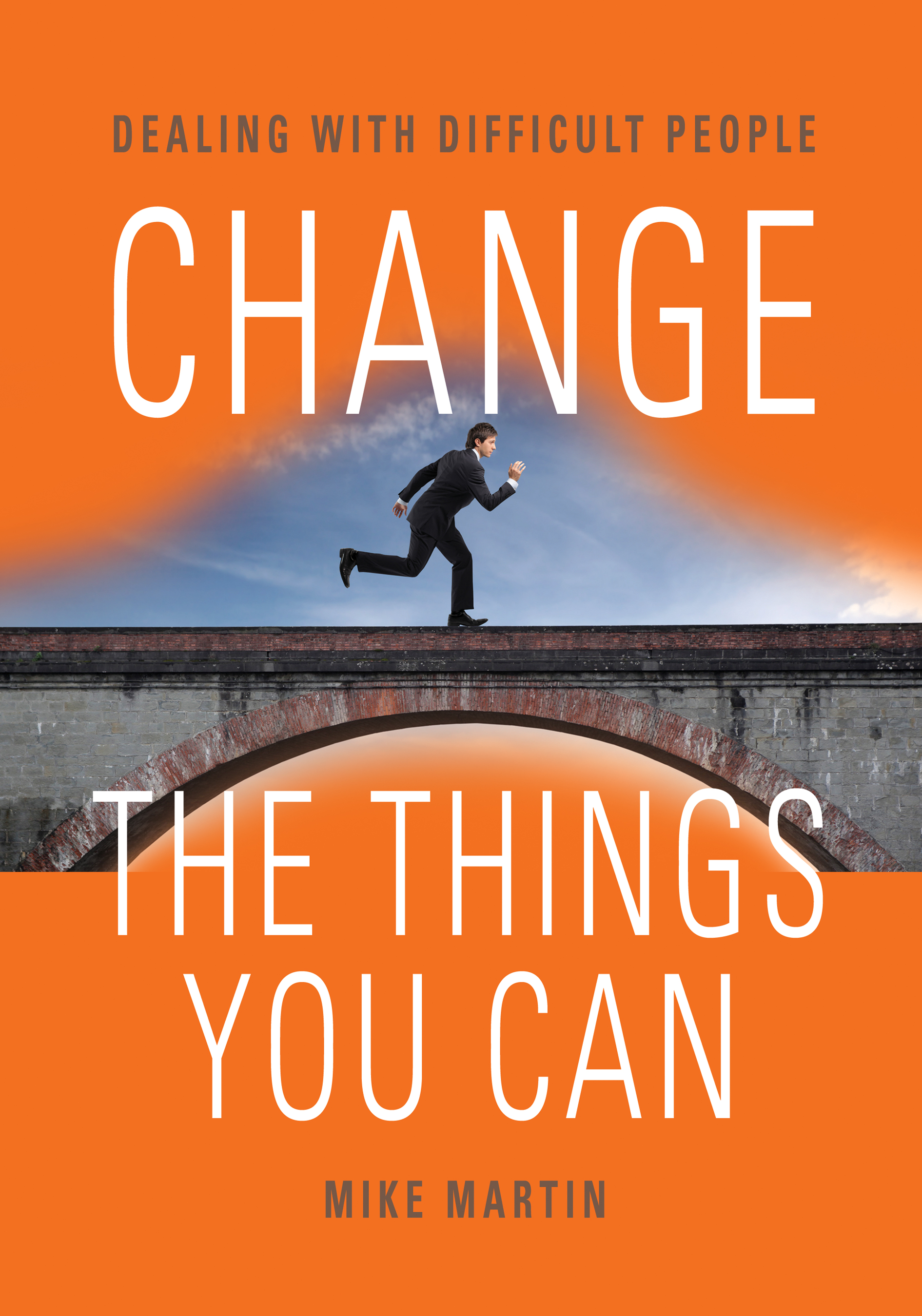
Are You a Difficult Person?
As promised here is Part 2 of the Ten Signs of a Difficult Person. Even if you see yourself all over this list remember that there is always time to change. Your friends, family, and especially co-workers would be eternally grateful if you did!!
Ten Signs of a Difficult Person
Part 2
6. You can’t seem to control your emotions at work
Whatever is going on in your personal life will affect your work life. That is absolutely true, all of the time. There are however invisible lines that you should never cross at work, most of them relating to your emotional behavior or how you let your personal side and/or problems out into the workplace. Everyone will understand a period of grief or loss. Everybody, except the old and grizzled, will appreciate new love. Almost all will get the fact that a sick partner or a new baby will bring sleepless nights and increased irritability. It’s when these emotions are manifested in a way that is inappropriate and involves other workers who chose not to be involved, that it becomes a problem. You are a difficult person if you cross those invisible, but very real lines at work.
7. You can get angry very easily
There are incidents and events in our lives that legitimately arouse our ire and anger. When they happen we feel a rush of adrenaline that produces the “fight or flee” instinct. A normal person will judge the most appropriate response given the extent of the situation and act accordingly. Sooner rather than later the anger will subside a little, at least enough to allow us to continue on with our lives.
A difficult person only has one response to such situations. They get angry very quickly regardless of the situation and they hang on to that anger for days and days. They try and hold it in but at some point their anger, that by now has been turned into resentments, explodes. If that has happened to you more than a few times then you meet the basic qualifications of a difficult person.
8. You over-drink or abuse substances, legal or otherwise
This is the classic “chicken and egg” question. Do you over-drink or use other substances because you have difficult situations in your life or do you become a difficult person because you use and/or abuse substances? The answer is that it doesn’t matter. Abuse or addiction is an unhealthy way to cope with life and the others around you almost certainly will think you are a difficult person. That is the nature of the disease of addiction and abuse, even if you don’t recognize it. There is lots of help available to help you deal with this issue and you will be wise to seek that out and take advantage of it. Before it gets worse. And believe me it can get much worse.
9. You are paranoid and think “they” are out to get you
It is not easy to self-diagnose paranoia, since it is an ailment that you have created with your own imagination. But if you find that you are spending more time thinking about what “they” are going to do, versus what they actually are doing, then you are at least a little paranoid.
Paranoia is another form of fear and it can paralyze you if you let it run free. It does not necessarily make you a difficult person unless you apply your paranoia filter to everything that people say or do around you. Even worse is to act on your paranoia by building walls, real or imagined, around you. If you find that you are you doing that you are probably a difficult person.
10. People tell you that you are “difficult” to work with
Most people don’t lie and if you ask them the straight up question, “Am I a difficult person?” and they say yes, maybe, or sometimes, then at least part of the time you are a difficult person. If someone volunteers this information, especially a close friend or colleague, then you can be pretty sure that as much as you may be trying not to, some of your difficult personality is leaking out. The good news is that you have friends who care enough about you to want to make suggestions to become an even better person. Thank them for their honesty, and keep reading this book. Just substitute I for them every time you see an identification of a problem and see the solution inside of yourself.
(Excerpted from “Change the Things You Can: Dealing with Difficult People” by Mike Martin. Available at Chapters.ca, Amazon.com, and Booklocker.com)

Are You a Difficult Person?
Dealing with difficult people is always an interesting workshop topic and many books (including one by me) have been written on the subject but what I have discovered is that before I could deal with the difficult people in my life I had to look in the mirror and ask a very important question. Am I a difficult person? So to help you (and all the people around you) here is Part I of the Ten Signs of a Difficult Person.
Ten Signs of a Difficult Person Part I
1. You have few friends at work
It may be that everyone else is a snob or you may be new at your job. Give it a little time and see what happens. Be a nice, helpful person and do your job well and most people who are not difficult will respond in kind. If you still have few friends after a year or so even after your best efforts then you should consider leaving. It may not be the right fit for you. If you find that you make friends at work and then lose them fairly regularly, it’s all about you. You are a probably a difficult person to get along with.
2. You have serious low self-esteem at work
Some of us are born this way but most of us get low self-esteem from messages that we have been given as a child, usually from our parents. As adults we often have to work very hard to stay positive about ourselves. If you find that your self-esteem is low, or getting lower at your place of employment, it may be that you have someone triggering those feelings in you. If that is the case you have to find a way to deal with it in a positive manner or move on. If you are a difficult person you will not be able to process this input and may find that your self-worth is even decreasing. Your response may be to either further withdraw or lash back. Either way, you are being a difficult person.
3. You feel shunned or ignored at work
If you feel shunned or ignored at work then it is either your feeling or it is real. If you think it is just a feeling, then ask one of your co-workers. An honest person will tell you that it’s your perfume or lack of deodorant. If you do not change then you are a difficult person. If you are really being shunned at work then you need to figure out why. If it is because you are just a superior wit and intellect you may want to dummy down for a while. If it is because you can’t keep a secret or blame other people for your mistakes then you are probably a difficult person. To not change these behaviors makes you a truly difficult person.
4. You feel people pull back when you come close
Once again, review your personal hygiene. If that’s not it, then you may need to ask someone why it appears that they or others are pulling back from you. Be prepared for an answer you may not like and try not to react. They may tell you that they are afraid of your reaction to things, that you are too negative, or that you are always complaining. If you react you lose all of the points you have accumulated to date and have to admit you are a difficult person. If having heard the truth from the lips of your co-worker you choose to ignore it, you move up into the officer class of difficult people.
5. Your boss tells you that you need help
Your boss may be a very difficult person to work with. He or she may be a controlling bully or just a mean old dog. But if they ever tell you “I think you need help”, that is one surefire way to know that you are a difficult person. By the time you reach this point you would have had plenty of opportunities to screw up and just as many opportunities to change. You have chosen to continue and to have your boss name it is just the icing on a well-baked cake. You have formally arrived as a difficult person.
(Excerpted from “Change the Things You Can: Dealing with Difficult People” by Mike Martin. Available at Chapters.ca, Amazon.com, and Booklocker.com)

I have been very fortunate in my working career. I have never been without work for more than a few months at a time and for most of my life I have actually been doing what I like for a living. I realize that makes me probably part of another 1%, those who like getting up and going to work in the morning versus the 99% who look forward to the weekends instead. It also makes me grateful for having had such great opportunities but it also makes me wonder what will happen to our sons and daughters and their children in the next generation of work.
They do have some clear advantages over my generation. First of all they are likely smarter and better educated. And they are certainly more technologically advanced. I am old, old school when it comes to computers. I still remember the days before personal computers when the “main frame” was in a massive room with banks of cooling fans and reams of printout paper that looked like it would choke the life out of the whole apparatus. Today they have no fear of technology and in fact believe that it is already their friend.
And time eventually will be on their side as old codgers like me and the rest of the baby boom generation finally gets the hell out of the workplace and makes some room for them. But they will patience because too many of us are likely going to working way past the suggested retirement age of 65, 67 or whatever it might be in the future. Some will work because they still like to and because they can but even more, especially women, will work in their senior years because they have to.
This means that in addition to everything else the younger generations will need a lot of patience, not usually a quality that is in great supply in our youth. They will also need luck in continuing to find placements and opportunities to learn and master their craft. And they will need to lower their expectations if they are going to have any sense of peace of mind during their early years. I saw a study a while ago that asked young people how much they thought they would make in their first few years after college or university. The answer was that they hoped to be in the $45k to $50k range which is not far off the mark. But when you asked them how much they thought they’d be making five years later these numbers soared to between $75k and $80k. As a wise person once said “not goin to happen.”
But the biggest challenge of all will be actually finding a job or career that has any kind of security, both in terms of tenure and compensation. And surviving through lean times with much less of a social safety net. Or having to move not just to other cities or provinces but other countries or continents. I wish them well as they head out with their cap and gown and youthful enthusiasm. I hope that they will be successful. My downsized living space is getting too small for another generation of adults to cohabitate with me.
Mike Martin is a freelance writer and workplace wellness consultant. He is the author of Change the Things You Can: Dealing With Difficult People.

Mentoring may be one of the latest buzzwords that is capturing attention on whiteboards all over the country but it is anything but new in the business environment. What is new is the utilization of mentoring to help women, visible minorities and people with disabilities and the fact that mentoring is no longer an informal activity but one that is actively encouraged and supported by senior management.
At its most basic level a mentor is simply a person who has more experience than someone else, usually younger or newer in the workplace, and is willing to share that experience with them. In business a mentor can pass on what they have learned and how they achieved success, and sometimes stumbled, in their career so far. They can also help introduce someone to their friends and network and provide encouragement and advice as their mentee learns and grows.
A mentor however is not a coach. A coach acts as a facilitator to help their client find the answers and the wisdom within themselves. A mentor on the other hand will share their personal insights and provide advice and guidance to their mentee. Coaches may offer advice and suggestions about getting in the door but mentors help push the career doors wide open.
Mentoring can be a particularly useful tool for women, visible minorities and people with disabilities because the emphasis of mentoring is on being inclusive and in bringing the mentee further inside the workings of an organization. In many cases the doors to the executive boardroom are not as easily accessible to these groups because of old systems and even older old boys networks. This can become a barrier to advancement especially for women and having someone who has been there before is a great encouragement to aim and reach higher than without this support.
It is easy to understand how a mentee would benefit from having a mentor but what does a mentor get out of this process? According to many who have participated in a mentoring program there are just as many benefits to the mentor. First of all they get acknowledged by the organization for their particular expertise. Secondly they realize that even if they have but a few more years of active work that they are still a valuable asset to the organization.
But most of all mentors also grow through the mentoring process. Sometimes this comes from looking at the organization or problems from a younger, less experienced, but also perhaps less jaded eyes that are open to new solutions to old problems. And sometimes it is just from the synergy that is created when two very different heads work on the same issues. Both learn from the process.
Mentoring works. For everybody.
This article originally appeared on my blog at www.jobs.ca
Mike Martin is a freelance writer and workplace wellness consultant.

The late and great country singer Johnny Cash once said that “You build on failure. You use it as a stepping stone. Close the door on the past. You don’t try to forget the mistakes, but you don’t dwell on it. You don’t let it have any of your energy, or any of your time, or any of your space.” That’s because for most of us failure is just the beginning on the road to success.
Sometimes failing means that you have not succeeded in achieving something. At other times it may mean that you can’t move forward. But it doesn’t always mean defeat. When we try our very best and we don’t succeed at something on our first try. It is a setback, but it is only a failure if we do not learn our lessons, if we don’t grow from the experience, or if we make the same mistakes again.
Henry Ford said “Failure is the opportunity to begin again more intelligently.” And the truth is that as long as we learn from our mistakes and can begin again more intelligently in the light of our previous errors we are not failures.
If we can grow from the experience of our initial setbacks then our efforts may not always be successful but we are still not failures. The great jazz musician Miles Davis is quoted as saying “Do not fear mistakes, there are none.” What he meant was that we have experiences that we can grow from and if they don’t always go our way, that’s okay too.
The last piece of advice about failure comes from the late Robert Kennedy Junior who said, “Only those who dare to fail greatly can ever achieve greatly.” If you make a mistake, don’t worry. It’s just a marker on your road to great success.
This is not just Pollyanna thinking or bromides to make you feel better when you screw up. Thomas Edison had thousands of unsuccessful experiments before the light bulb literally went on. And he is not alone. Think about something that you have tried over and over until you finally got it. For me it was Grade 10 math. I failed it the first and second term and thought I would have to stay in Grade 10 forever. At the time a fate worse than death.
I wish I could say that I conquered this demon and became a math brainiac but I just barely passed that subject at the end of the year. But I didn’t let my initial failure stop me from moving forward and while I may never be scientist I am doing just fine as a writer. Starving, sometimes, but if you are reading this then I am a success too.

No matter what your field of endeavor or line of business you have made mistakes. Almost everyone in marketing has sent out a sales letter that has received little or no response and there is no one on the planet, not even Warren Buffet, who picks all the right stocks all of the time. The difference between a successful marketer or investment managers like Mr. Buffet and many of us mere mortals is that they learn from their mistakes.
They treat a mistake as an opportunity to learn, and begin again. They also don’t let fear of failure deter them from ultimately being successful. That fear of failure is what holds the rest of back. It paralyses us in a state of dread and inaction that will surely lead us to fail again. Even worse is that this fear can keep us stuck in this place, too afraid to even try again.
As millions of scientists, inventors, and successful people have found out, failure is actually a prerequisite to success. The more mistakes you make, the more you can learn. If that sounds dumb, then think about Thomas Edison. He undertook thousands of experiments that didn’t work out, but he learned from every one of them until, fortunately for us, he got it right. You too can learn from your mistakes and here’s how to do it.
Define the mistake. Take the time to go through all of the steps in the process. What worked and more importantly, what didn’t? The things that worked become part of the solution, the things that didn’t become part of the past.
Take Ownership. Know what part you played in the mistake and admit and acknowledge that to yourself, your team, and your superiors. It’s not just the right thing to do, it stops the blame game right in its tracks so that everyone can move more quickly towards a solution.
What caused the mistake? Was it a human error or a technological breakdown? Walk through the process step by step until you can pinpoint the cause of its demise.
What could fix this mistake in the future? Now you’re ready to start thinking about trying again. You know the cause and can work on fixing it. What will you do differently the next time in order to get a positive result?
It’s okay to make mistakes. Repeat that a few times until you get comfortable with it. But it’s never okay to make the same mistake again. Learn from your mistakes and you’ll never have to go through the pain of that mistake again.
Excerpted from Change the Things You Can: Dealing With Difficult People by Mike Martin.
Mike Martin is a freelance writer and workplace wellness consultant

Workplace bullying is not new and most of us have experienced a boss or supervisor or another co-worker who has treated us with disdain, contempt or worse. Some of us have been verbally attacked and even threatened with physical violence at our place of work.
Few of us had the willingness to complain or report these activities and simply remained silent in the face of these attacks because we were afraid or just wanted to keep our job. So the bullies kept up their behavior until we quit or asked for another assignment.
What’s different about the situation today is that more employers are taking steps to eliminate workplace bullying and to sensitize all of the employees, especially supervisors and managers, about the impact of their actions on the morale and productivity of their staff.
A bully uses aggression and violent behavior to compensate for feelings of inadequacy. It seems that bullies just don’t like other people who are good at their job and have an ability to get along in a non-confrontational manner. They feel threatened by these people and need to diminish them in order to feel better about themselves.
Peer on peer bullying is often disguised as “healthy competition” between workers and will manifest itself by acts of sabotage, undercutting, and spreading gossips and rumors. There is nothing healthy about such a situation.
If the bully is a boss or superior they may try and set the employee up for failure by setting unrealistic deadlines, not providing the necessary information and resources; or either taking away work or just piling it on. In both situations this underhanded behavior is designed to embarrass and harass the employee and is almost always accompanied by verbal assaults and threats.
So what can be done about workplace bullying? Most experts say that it needs to be treated like any other disease. You need to treat its impact as soon as you become aware of it, identify the symptoms early, and eliminate or reduce the risk through prevention.
Define the behavior that you feel is bullying
You have to clearly define the actions, words, or gestures that you feel are bullying. If the person yelled at you or called you names then name those behaviors.
Tell the person that you think it is inappropriate behavior
After you define the behavior tell the person that you think that this is inappropriate behavior and that you consider it to be bullying. Do not engage in any discussion about the behavior, especially their excuses.
Tell them you don’t like it
You need to make a clear, strong statement that says, “I don’t like that behavior.” Resist the urge to water this statement down and it’s important that they hear it directly from you.
Ask them to stop
You also need to ask them to stop this behavior, firmly, but politely. They need to know what you expect from them and that is that they will stop this behavior.
It’s not easy to carry out this process with someone who is aggressive or intimidating, especially a difficult person, but you need to follow these steps in order to try and change the bullying behavior. But remember nobody has to put up with bullying behavior in the workplace.
This article first appeared on my blog at www.jobs.ca
Mike Martin is a freelance writer and workplace wellness consultant

In the Kenny Rogers song “The Gambler”, he sings “You got to know when to hold ’em, know when to fold ’em, know when to walk away and know when to run.” The rest of the chorus is not as helpful or optimistic and concludes with “the best that you can hope for is to die in your sleep.” That is not the best you can hope for in dealing with a difficult situation in your life, especially at work. If you know when to walk away.
Sometimes it just isn’t worth it. The job, the money, the prestige, whatever you are receiving from your employment just isn’t worth the aggravation that you are going through. If you have are still bothered by any situation to the point where you are ill, mentally, emotionally or spiritually, then take a long look at where you are. If it is unlikely to change then make a plan to transfer/leave at the end of the year and walk away.
You know surrender has a bad name these days. Once it meant a noble gesture that the losing side made to the conqueror in battle. It was a loss but not a disgrace if you had fought long and well. You surrended because you and your troops got to live another day. The ending of the war in Europe and Japan was brutal and devastating. But after the surrender things began to improve and today both Germany and Japan have societies to emulate.
Even in the American Civil War the Confederacy troops were allowed to keep their uniforms on and reatin their guns after the surrender, because they were only clothes they had and because they needed their guns to shoot food on the way home. So giving up, despite Winston Churchill’s admonitions, is not the end of the world. Especially if it means keeping your health and your sanity.
If you do decide to quit your job then don’t do it in anger or haste. Take some time, even up to a year if it’s been a long career or assignment. Spend that year trying to understand what exactly happened while you plan for the future. Learn the lessons about life and about yourself that have been presented to you because if you don’t you are likely to be back in a similar situation sooner than you think.
Walking away from a difficult situation is not quitting nor does it mean you are a failure. Those are old messages that serve no one except stupid jock radio announcers. This is real life, not some game. Walking away might save your life or at least let you live to fight another day.
This is an extract from Change the Things You Can: Dealing with Difficult People, available at Chapters.ca and from booklocker.com
Mike Martin is a freelance writer and workplace wellness consultant.

