
A recent survey by global professional services company Towers Watson revealed that North American workers cite excessive workloads, lack of work-life balance, unclear or conflicting job expectations and inadequate staffing as the top sources of workplace stress.
The survey was completed by 335 human resources and/or health benefit managers inCanada(87) and theUnited States(248) with at least 1,000 employees. The responding organizations employ 7.8 million workers and operate in all major industry sectors.
Key findings of the survey:
Mental health conditions continue to be the most common reason for disability claims.
The top three drivers of short-term disability claims are:
■Mental health conditions (83%)
■Muskuloskeletal/back issues at (76%)
■Accidents (37%)
Employee stress is a major and growing business issue.
Many are planning to adapt their organizational health strategies for the next two years to include a focus on mental health (61%) as well as physical health.
The top sources of workplace stress are:
■Excessive workloads
■Lack of work/life balance
■Unclear or conflicting job expectations
■Inadequate staffing
Today nearly 9 in 10 (89%) employers say excessive workload is a problem — a staggering 25% jump from 2009 to 2011 (from 64% to 89%).
The sad news:
Though organizations are striving to limit the impact of workforce stress on business performance, the majority report underwhelming results. In fact, less than 10% of companies say their actions have produced significant success.
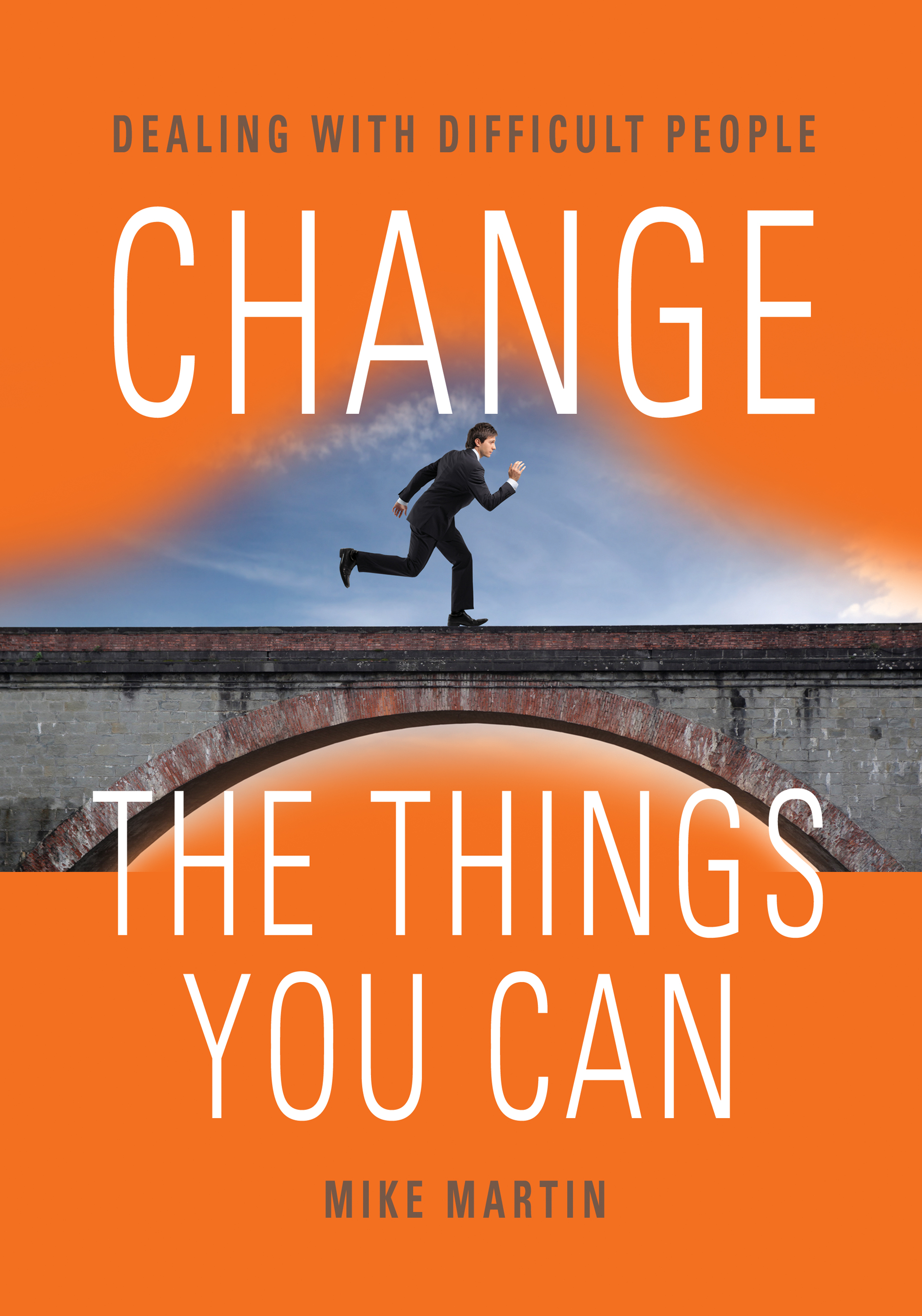
Mike Martin is a freelance writer and consultant specializing in workplace wellness and conflict resolution. He is the author of “Change the Things You Can” (Dealing with Difficult People). For more information about Mike please visit:

In case you haven’t noticed it, technology is not our friend. Not quite our enemy, but certainly not our friend. When did it turn against us? I’m not quite sure; but I do know this: it has gone from being a relatively benign force in our lives over to the dark side.
Over the years, technology has promised us the world, and when it couldn’t deliver, it promised us the universe. When the promises got so big that no one could possibly live up to them; that’s when it started to lie. Here are some of the whoppers of technology:
Lie #1: Technology will help you work less
Remember that one? Maybe the abacus workers are working a reduced work week, but the rest of us we have never worked more. No one works 35 or 40 hours a week any more. Anyone who’s working at a lower level or minimum wage job is working two or three jobs just to make ends meet. Most people are working at least 50 hours a week and anyone in a managerial role is working 60 plus hours a week.
Lie #2: Technology will eliminate paperwork
So how do you like living in a paperless world? Just a second, I’ll tell you when I finish printing my copy of that email you sent me. Maybe if the promise had been fewer envelopes, it might have had more success. The mail is still there; it’s just stuck in cyberspace, or more likely in your overflowing email basket. Or worse yet waiting for them to clear the queue on your BlackBerry and you get a hundred and four dumped at once.
Lie # 3: Technology will be our servant
Oh yeah. Remind yourself of that when it’s ten-thirty on Sunday night, and you are cutting and pasting your presentation for the Monday morning briefing session. Or when the server decides to take a break for days in the middle of your yearly sales drive. Try and find the techies and the user support people and then get them to agree on the solution as you tread water. How may I serve you again?
Lie # 4: Technology will simplify things for you
I’m not a Luddite. I like experimenting. But sometimes, I just want to turn on the stupid thing and have it run. Why do highly specialized, highly educated, highly technical people want to guide me through processes so that I will understand? I’m from the “still can’t program the VCR generation.” I think that a bluetooth is a kind of whale. Nothing technological is easy, nor is it ever simple. For me, bits and bytes are a snack food.
There are hundreds of these lies out there. What can we do to protect ourselves? No advice here, just a caution: be careful. Be very, very careful. Who knows what ugly surprises that old trickster – technology – has in store for you?
Mike Martin is a freelance writer and consultant specializing in workplace wellness and conflict resolution. He is the author of “Change the Things You Can” (Dealing with Difficult People). For more information about Mike please visit:

One of the many things we learned from the flu frenzy, in addition to washing our hands and sneezing into our elbows, is that if you think you have the flu then stay home to reduce the risk of infecting your whole office.
We’ve all seen co-workers struggle their way into work carrying a large bottle of orange juice and an even larger box of Kleenex. They wheeze and cough their way through the day moaning and groaning as if they are going to die. In a few days they will be better but as for the rest of the office, half of them are now home in bed with whatever version of flu or cold germ that was first introduced to the office.
If you are one of these people who goes to work sick then you are not alone. According to recent on-line poll 61 percent admitted going to work while they are sick. 26 percent of those polled said that they were going to work sick because they were afraid they would lose their jobs. I guess that might be a valid consideration. But 35 percent said that they went to work because they had to meet deadlines or keep up to speed on important projects.
To me that’s incredible. Not only are sick employees risking the health of their co-workers they are putting their work ahead of their basic needs. When you are sick you body needs time, space and rest to heal. If you do not provide that then you run an even greater risk of being sick longer or developing complications like pneumonia, bronchitis or infection. I’m no doctor but I’m pretty sure that sweating and sneezing at your desk is not a prescription for good health.
So the next time when your temperature is 102 degrees and you’ve spent all night hacking and wheezing do us all a favour. Just stay in bed and call the office to tell them that you won’t be in today. It may be hard to imagine but life will go on without you and most importantly all of us will be very grateful.
Mike Martin is a freelance writer and consultant specializing in workplace wellness and conflict resolution. He is the author of “Change the Things You Can” (Dealing with Difficult People). For more information about Mike please visit:

As parents and teachers we always encourage our children to do their best and strive for perfection. But we have to be careful not to cross the line between asking them to try their best and creating a situation where they think that they have to be perfect. The impact could be profound and not only influence their confidence and self esteem as students but carry on with them throughout their lives.
If they develop a pattern of perfectionism it may rob them of the simple pleasures of working hard and enjoying what they do achieve. It also means that no matter how much success they achieve, they will never really be able to enjoy it unless they are absolutely perfect. The simple truth is that perfectionist children turn into perfectionist adults and this could lead to many problems further down the road.
Psychologists and psychiatrists who have studied perfectionism have found that many turn into workaholics which may be good for employers but create many difficulties for the workers themselves, especially in regards to their physical and mental health. Another trait they have observed is procrastinating or delaying doing certain things unless the perfectionist thinks that they can complete the task to perfection. They also become risk adverse because they are afraid of making a mistake. All of these factors in turn lead to unhealthy adults and workers who have high levels of anxiety and low esteem.
This is not the world that we would like our children to live in. There are enough pressures in today’s society without the added burden of having to be perfect. As Winston Churchill once said “Success is the ability to go from one failure to another with no loss of enthusiasm.” So by all means encourage your children to work hard, but also teach them that as long as they do their best, they have a right to celebrate every piece of success that they earn. That way they can not only enjoy their achievements but also feel free to try new things and even make the occasional mistake.
Perfectionism really is a tough road to follow. We can make it easier on our children and ourselves by just asking that they do their best.
Mike Martin is a freelance writer and consultant specializing in workplace wellness and conflict resolution. He is the author of “Change the Things You Can” (Dealing with Difficult People). For more information about Mike please visit:

My first summer job was a little strange, even eerie. But it taught me a few important lessons about myself and the world of work.
I lived near a cemetery and every summer there was an annual cemetery mass. For two weeks a year before the mass, it became a Mecca for the rich families of the dearly departed. And surprisingly for myself and my thirteen-year-old friends, an economic bonanza.
We would gather up all of the neighborhood gardening utensils: rakes, spades, garden shears and wheel barrows, and head off to stand sentry at one of the gates to the property. We would offer to clean up the family plots of visitors who came to check out the condition of their loved ones’ resting places. For a fee, of course.
The first thing that I learned from this job is that the early bird really does get the worm, or in our case, the work. That’s because we weren’t the only wandering band of street urchins seeking to assist the nobs with their grave keeping. At least three other gangs were actively offering their services and the one group that arrived at 9 o’clock in the morning had exclusive access over the rest of us who straggled in to work at around 11.
Soon all our happy, if sleepy, faces were firmly in place for the 9 o’clock traffic. By then, we had also agreed to a somewhat fragile truce that saw each gang stake out its territory at each of the four gates. Your location was determined by having a member of your group living closest to the gate in question.
Which helped me with the second lesson in the world of work: how to get along in the workplace. Stay out of other people’s business and territory, and learn to get along with your neighbour, whether they are in the next cubicle, or patrolling the next entrance. Somehow our informal and unspoken system worked. We all got a little work and we all made a little money.
Money – the root of all evil, my mother would often say – was our main goal. None of us had any and all of us wanted some. Not that we needed it, but we had a long list of wants: coke, chips, chocolate bars, and (don’t tell my Mom, but) cigarettes, as well. (Maybe she was right about that “evil” thing.) In any case we were young, greedy and very unwise in the ways of the world.
At first, we thought that whatever the customer would give us for our services was just great. We soon learned that the customers were shopping around amongst the four work gangs to see who would offer the cheapest price. What we were left with was one very tired and overworked group who undercut the rest of us and still ended up with less money in their pocket than before, and three groups with only a pittance from their labours.
A meeting of the oldest and biggest members from the four groups soon straightened this matter out. For our remaining days, including the two most lucrative before the cemetery mass, we had fixed prices for a small, medium, and large job that everyone agreed to, and if the customers didn’t like it, they could do the job themselves.
A very important lesson about the rights of workers and the power of getting together from a rag-tag collection of thirteen-year-olds. We had no union dues, but even then, we understood the principles of solidarity and sticking together for the benefit of all.

Finally, the most important thing that I learned about work and life was that the best part about work wasn’t the work, or even the money I got from it. What was the most fun was just hanging out with my friends, enjoying the nice summer weather, and if we never got another customer, that would be just fine with me, and them, too.
I have had lots of jobs since those early days, but few have been as much fun. Instead of working this week, maybe I’ll just go hang out with my friends. Talk about the old times and just enjoy their company. Doesn’t that sound great?
Mike Martin is a freelance writer and consultant specializing in workplace wellness and conflict resolution. He is the author of “Change the Things You Can” (Dealing with Difficult People). For more information about Mike please visit:

So are you a workaholic? The basic self-test for a problem is that if you think you have a problem, then you probably do. So what can you do about being a workaholic? The obvious answer is to work less but if it was as easy as that you would have already done it. Wouldn’t you? The first step after admitting that you have a problem is to tell someone else and then ask for help.
This help can range from the very informal like talking to a trusted family member or friend, to the very formal of joining a self-help group like Workaholics Anonymous. Yes, there is a twelve step program for workaholics. There are many other options in between.
If you feel comfortable you should start with the persons closest to you at work and open up a discussion with your supervisor or manager about how you are feeling around work and that you want to find a way to slow down. They might have some suggestions to make and they might also suggest that you talk to HR or someone in the Employee Assistance Program if you have one at work. These programs are always confidential and can provide a great outlet to just talk things over.
If you are not comfortable raising this issue at your workplace there are lots of other ways to deal with your situation. You can research the Internet or visit your local library to get suggestions and information sources. Workaholics are often so busy that they don’t have time to read so perhaps this is the first break that you make with your workaholism. Read a book. It may not matter which book it is but maybe find one that helps you slow down and learn to take it a little easier.
You may or may not want to involve a professional coach or mentor in this process but you will definitely need a friend. Use one that you can absolutely trust and ask them to help you. They will likely already know that you have a problem and be happy to help. Use them as your accountability measure and tell them all about your plans to slow down at work and break your old habits. Then put your plan into place.
Start your plan slowly, maybe by making a commitment not to work every weekend and you can always add to your plan as you go along. Tell your boss that you will not be able to work any more than a fixed number of hours, any amount less than what you already do would be an improvement. Call your family and make plans to get together since they likely haven’t seen you for a while. Finally take a deep breath and try to relax. You can do this.

When you think about working more remember the quote by Agatha Christie who turned to writing mysteries because…..“I didn’t want to work. It was as simple as that. I distrusted work, disliked it. I thought it was a very bad thing that the human race had unfortunately invented for itself.”
Are you a workaholic? Like many other problems in life if you think you have a problem, you’re probably right. But just in case you aren’t really sure that you are a workaholic here’s a short quiz to make your own determination. If you’re still not sure at the end of the quiz just ask your family, friends, or significant other. They will tell you the truth even if you don’t want to admit it to yourself. Don’t bother asking your co-workers though. They are probably in the same boat that you are.
Do you always feel rushed at work?
Do you feel trapped at work?
Is your health suffering from too much work?
Do you have trouble sleeping?
Do you feel unsatisfied about your work?
Do you have enough time for family and friends?
Do you have time for personal exercise or fun?
Do you work 50 hours or more a week?
Have you tried to slow down at work in the past but have been unable to do so?
Have you cancelled or postponed vacations because of work?
Do you work on weekends?
Do you sometimes get stuck at work?
Do you think about work while falling asleep or when you first wake up?
Do you over commit yourself at work?
Are you afraid of failing at work?
Do you eat your lunch at your desk or read work during meals?
Have you cancelled or postponed social events because of work?
If you answered yes to three or more of these questions you are a probably a workaholic. So what now? Well, admitting that you have a problem is the first step to moving towards a solution. The next step is to get some help.
What help would you offer a workaholic?
Stay tuned next week for your answers and some from “the experts”
Mike Martin is a freelance writer and consultant specializing in workplace wellness and conflict resolution. He is the author of “Change the Things You Can” (Dealing with Difficult People). For more information about Mike please visit:
www.changethethingsyoucan.wordpress.com
 If one can be grateful about the Canadian climate it is because one season kills off the bugs from the last. In winter, which is over half of the year, the flu bugs with their ever- increasing immunity from any other treatment than aspirin and bed rest, are almost completely wiped out once warm weather arrives, sometimes though not until near the end of school.
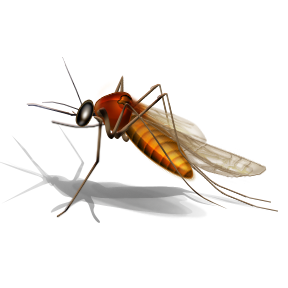
The other half of the year, it seems, we have to deal with viruses that have fallen from the heavens and delivered on the pointy ends of mosquito stingers. Nasty little viruses and diseases like SARS, and Norwalk and the potentially deadly West Nile Virus.
I was thinking how grateful I was the other morning as I was scraping the first layer of frost off my partner’s car. Gee, no mosquitoes. I have survived another year without getting West Nile. I must have been bitten 400,000 times, but none of those bloodsuckers had my name on it. Whew!
From the earliest days of Canada the Jesuits and the voyageurs there have been complaints about two things. The weather and mosquitoes. Now we find out that not only are they uncomfortable, but both can kill us. It used to be just the usually vicious and too-long winter, but now we have killer ice-storms, hurricanes, floods and droughts. The weather we know about, and we can provide ourselves some measure of protection against most of the predictable events. But mosquitoes. That’s a different story. You can run but you can’t hide.
According to Health Canada 74 species of mosquitoes are found in every part of Canada, everywhere except on a few of the small Arctic Islands. The good news is that most species do not live more than a month as adults. The bad news is that some of the larger species are long-lived, persisting from late May until August or even early September.
Other than staying indoors from May until October, which might mean that we have to stay inside all year, there is little you can do in Canada to stop being bitten by your friendly neighborhood Culicidae. (That’s Latin for mosquito.)
Oh there are plenty of suggestions that people swear will stop mosquitoes from biting: Bounce Fabric Softener Sheets, Vitamin B-1, Bananas, Vicks VapoRub, Skin So Soft. Even Vanilla Extract.
Hey, if it doesn’t work then you will smell better, especially you manly, woodsy types. And if those flagrant fragrances don’t work you can also spend your time inside building purple martin houses or better yet a bat house. Isn’t that what you always wanted in your backyard? There’s a Vancouver gardener who’s actually building and selling bat houses, if you’re keen on that idea.
One more thought. Have you always wanted a nice cuddly pet? How about a frog? He could stay inside with you all winter and live in your fern pot. And in the summer you would let him out at dusk to earn his keep.
Canadian cities and politicians have spent more time trying to deal with mosquitoes than they have on any other issue and yet, despite spraying, larvaciding, sweeping, and bombing, our summer buddies return every year. My partner’s theory is that mosquitoes bite us because they know we are afraid of them. So she puts on her best Zen smile and walks around mostly unprotected, mostly unbothered, and almost completely unbitten.
I, on the other hand, just can’t seem to avoid getting eaten alive. If I were to stand still I would be like one of those old Western guys, tied to a fiery anthill and bitten clean to the bone by sunrise. That’s because mosquitoes can find you by not only sensing your fear, they detect both carbon dioxide and lactic acid (produced by muscle metabolism) in your breath. They can also detect infra-red light from your body.
I will practice my meditation and my patience over the long winter months. Or I may order that bat house building kit I saw on the internet. Maybe I should go for a walk, it may just be safe to go outside now without my long-sleeved shirt and mosquito net. Then again, it is getting cold. Oh well. See you in June.
Mike Martin is a freelance writer and consultant specializing in workplace wellness and conflict resolution. He is the author of the soon to be released book “Change the Things You Can” (Dealing with Difficult People). For more information about Mike please visit:
There have been many books and stories told about the importance of having purpose to your actions and to your life and for the most part I think that people are generally effective at doing this, at least for the most important things, and at least for short bursts of time. But I have to confess that sometimes my “purposeful life” is very short lived as I use my internal power to achieve a particular goal or solve a difficult problem.
The challenge therefore is how we maintain our long term focus on our purpose in the face of our short term memory on this subject. One of the answers is to go back to what was working for us in the first place. For me that means re-acquainting myself with some of the masters. These include the all time favorites like the Dalai Lama and Wayne Dyer but also some new thinking, like BerticeBerrywho I had the opportunity to hear a few years ago. She may be young in years but she is wise in wisdom. Dr. Berry earned a Ph.D. in Sociology from Kent State Universityat the age of 26 and is a sociologist, author, lecturer and educator.
The theme of her presentation was “When You Walk With Purpose, You Collide With Destiny” and althoughBerrybelieves that purpose doesn’t come by formula, there are some steps we can follow. Here are some of her suggestions:
Reclaiming Diversity
Berry cautions us not to be trapped by the labels and stereotypes that society may place on us. We should allow our thinking and beliefs to evolve as we grow and not be ‘boxed in’ causing societal beliefs to limit our purpose. Embracing diversity doesn’t mean that we see the difference in others, but that we join with others to achieve our purpose.
Living Your Life in Thirds
“Living your life in Thirds” is her way of saying that we shouldn’t get too focused on one part of our lives at the expense of others. We are whole consisting of three different aspects: work, family, community. Thus our purpose must involve all three parts as well. Her view is that our purpose does not involve only one aspect. We need full and balanced lives to be truly successful and our purpose in life will not come from only from work, but also from social interaction and community involvement.
Being Well and Staying Well
Dr. Berry points out that we have to maintain a balance between our body and spirit in order to stay focused on achieving our purpose. This involves eating well and exercising often, and it also means feeding your brain by engaging in continuous learning.
Claiming All Parts of Yourself
Dr. Berrybelieves that everything happens for a reason and once we understand the reason for our experiences—good and bad—the easier it will be for us to grow towards the light. By honoring all experiences, we align our self with our true purpose.
Learning to Laugh More
As a humorist Berry clearly understands the link between learning and laughter. Laughter is a restorative for all of our day-to-day ills. Through finding the humor in difficult situations, life is much easier.
So… How’s your walk going these days??
Mike Martin is a freelance writer and consultant specializing in workplace wellness and conflict resolution. He is the author of “Change the Things You Can” (Dealing with Difficult People). For more information about Mike please visit:
www.changethethingsyoucan.wordpress.com
The Power of Now
Eckhart Tolle
Sometimes the best ideas are the simplest ones and this book opened me up to the concept that I am actually more than what I just think. That my thinking might in fact be flawed and driven by my ego, which really wasn’t my friend. And that all we ever have is this moment, right now, to live and breathe and wonder. Simple but oh, so powerful!!
The Four Agreements
Don Miguel Ruis
Be impeccable with your word, don’t take anything personally, don’t make assumptions, and always do your best. Four agreements to make with yourself that if you can live by them, they will rock your world and change your life. Just practice one for any period of time and see how much easier life gets.
Becoming Human
Jean Vanier
Jean Vanier is the son of a rich and famous Canadian political family. His father was the Governor General ofCanada.Vanierleft fame and fortune to work with individuals inFrancewho had serious mental disabilities. What he found was that he learned more from them than he could teach them and discovered that in order to become human he had to rediscover love and compassion.
Alcoholics Anonymous
Written by a broken down stockbroker and a drunkard doctor who found each other and founded the Twelve Step movement this book has changed the lives of millions of people. If you or someone close to you has been touched by addiction, read this book, it might help. If you or your family is in the midst of the terror and agony of addiction, read this book, it may save your life and those you love.
The Art of Happiness
The Dalai Lama and Howard C. Cutler, M.D.
My daughter, physical age 19, emotional age 100, gave me this book because it had helped me through a difficult period when she was away from home for the very first time. It came to me just at the right moment. I was sick, depressed and ready to give up. This book gave me hope in the simplicity and brilliant wisdom of what I believe to be a living saint. Compassion and love are always his answer.
What are your powerful books?
Mike Martin is a freelance writer and consultant specializing in workplace wellness and conflict resolution. He is the author of “Change the Things You Can” (Dealing with Difficult People). For more information about Mike please visit:

