

One Path to Serenity: Solitude
By Mike Martin
Excerpted from Change the Things You Can (Dealing with Difficult People)
Being alone is a frightening thought for many of us. All of our lives we have been with other people. As children we live with our siblings and parents. As teenagers and students we gather in groups and share classrooms and dormitories. As adults we are part of companies and organizations and create our own network of family and friends so that we are almost never really alone.
We have a very real, physical need of the company of others in our lives. The companionship and relations that we share with people that we learn, play, work, live and love with is crucial to our sense of belonging in the world. We grow in our relationships with other people by watching them both succeed and fail, survive or prosper. We listen and learn and confide our secrets to them. It helps keep us sane and balanced.
But just as important to our sanity and fundamental to our serenity is the time that we spend alone. We may not have much of it in our lives, especially if we have work, family and community commitments, but we need to take advantage of those opportunities to practice solitude, the act of being alone and comfortable with ourselves.
Solitude is a way to reclaim your true self, not the worker or brother or sister or grandmother of others, but the essential you, the spirit that lives inside your stretched skin. It is a time to know yourself, to evaluate your progress in life, to regenerate your batteries for the nextMount Everestthat you hope to climb.
It is a time for reflection of the past so that you can learn. And for imagining a vision of the future which you would like to create.
You have to take this time, for yourself, in order to be able to give to the world or to others. So have a look at your life and see what you are using your solitary time to do. Are you spending it on entertainment which may be relaxing but not necessarily rejuvenating? You may be spending it to catch up on your sleep, in which case you may be sleeping through your best ideas. Maybe you might want to get an extra half hour a night in bed.
Treat your alone time as your special time. It is your gift to yourself. You can sit and read a good book; you can build something with your hands or work in your garden. You can use it to write or paint or learn a new skill or take a class in something you always dreamed of doing, but never had the time. Most importantly, use your solitude to become more comfortable about who you really are.
Mike Martin is a freelance writer and workplace wellness consultant. He has written and published thousands of articles about workplace issues for magazines and publications inCanada, theUnited StatesandNew Zealand. He has worked in human resources for over thirty years and has experience both as a senior manager and a union leader. For the past fifteen years he has worked with dozens of small, medium and large organizations in the areas of workplace intervention and conflict management.
To order Change the Things You Can please visit: http://booklocker.com/books/5576.html
As we watch the various forms of remembrances brought forward in the media on the 10th anniversary of 9-11 I am once again remembering my own reactions and those of the people around me in Ottawa on that fateful day ten years ago. I recall the feelings of disbelief and then horror as I realized that this was not a movie and that there were real living human beings inside the buildings where the planes had crashed. The first wave of numbness as collective shock shook all our worlds. Then an immense sadness as I thought of the victims and their families and frantically searched my brain to recollect who I knew in New York and if they might have been close to this disaster.
That day was pretty much a blur but I remember just before falling asleep doing something I had not done in a very long time. I prayed. I am not sure to whom or what I prayed but it felt like the right thing to do. I prayed for everyone who had been touched by tragedy that they would find strength to live with what had happened and find some way to carry on through their incredible grief and tears. Those quiet prayers helped me sleep that night but I knew I needed to do more to begin to accept what had happened in my world on 9-11.
Surprisingly, even shockingly to me, a life-hardened agnostic, I once again thought of prayer. Not just for myself, but for others. Not just by myself but with others. The news was filled with words of fear, anger and revenge but they offered no comfort. I needed to find some peace, some serenity in the midst of the storm that was erupting. The only way I could do this was to be with others to share their sadness and their grief.
So when I heard that there would be a gathering on Parliament Hill in Ottawa on September 12 I felt that my first prayer had been answered. At noon I followed about 100,000 others to the Hill. There were a few short messages of condolence from politicians including the Prime Minister and then without any formal prayers from any religious leader, we stood quietly and silently prayed.
I don’t know what the others prayed for, to, or about, but I prayed for whatever goodness there was in the world to bring comfort to the victims and their families, and peace to the world.
It was a very emotional time for all of us but in those brief moments I connected with all the others on the Hill, with their thoughts and yes, even their innermost feelings. Anyone who was there on that day had to feel that connection to themselves and others. Most of whom they never knew and many who they will never meet again. It was quiet, and comfortable, and even in the midst of a world filled with chaos, serene.
Those are the things that I choose to remember from 9-11 inOttawathose many days and years ago. Especially those few fleeting minutes when deep in our sorrow we knew we were no longer alone. When despite our fears we knew that we had a community that could be sustained by love. When even in our darkest hours we could hold each other up until we could all stand again together. I hope we never forget 9-11. But even more I hope that we never forget 9-12 in Ottawa.
Mike Martin is an Ottawa-based freelance writer and workplace wellness consultant. He is the author of “Change the Things You Can” (Dealing with Difficult People)
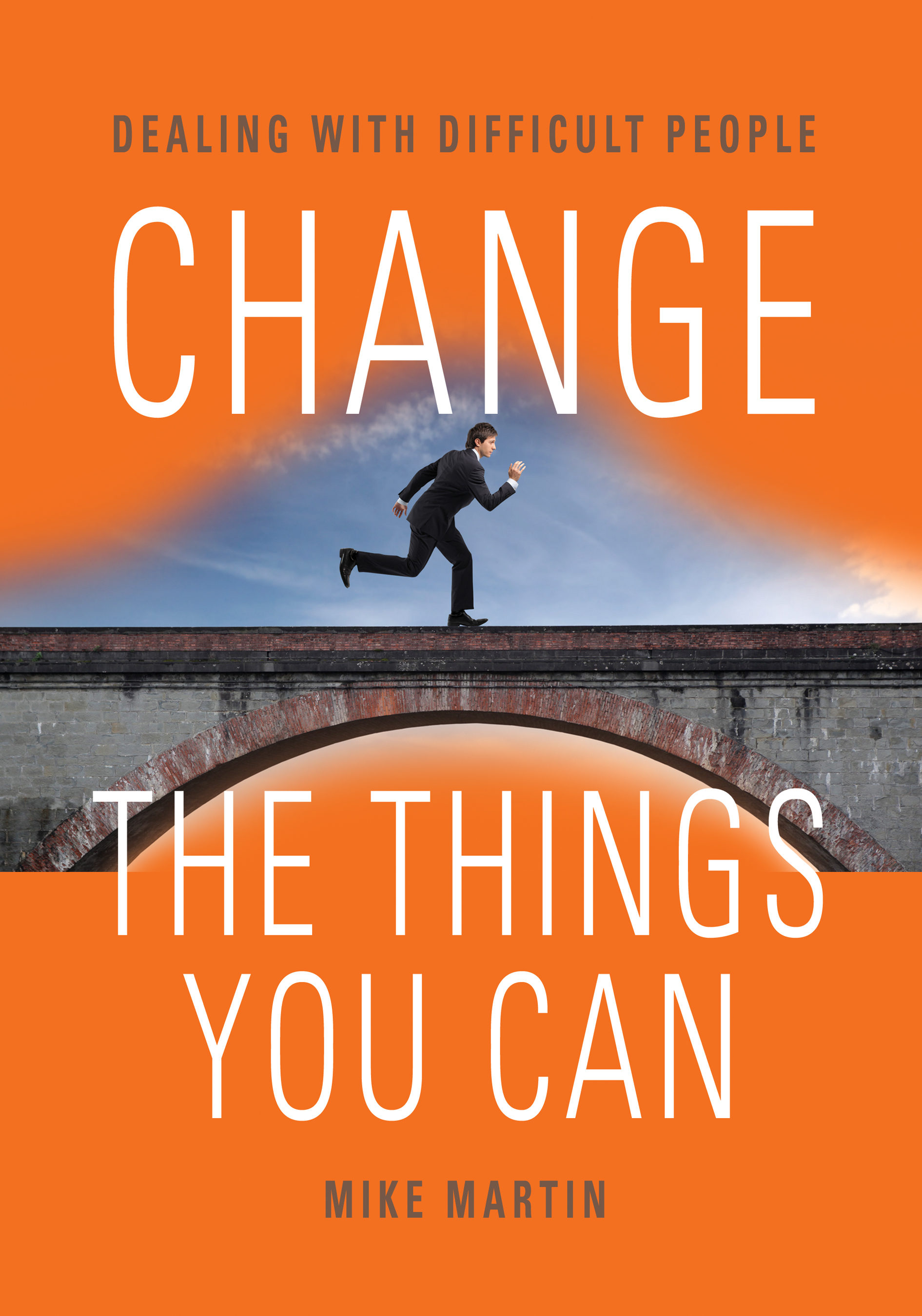
I am very pleased to announce the publication of my new book: Change the Things You Can (Dealing with Difficult People).
This book came from a lifetime of making mistakes in trying to deal with the most difficult people in my lifetime. It also came to me after writing hundreds of articles about resolving conflict in the workplace, dealing with bullies, and trying to improve the health and wellness of the modern workplace. Many of the situations and possible solutions I have developed relate to the workplace but the problems and solutions will work just as well in the other parts of life.
I have decided to publish this book on line using a Print On Demand system. That means that you can order the book (in print or e-book formats) on line at the following website:
http://booklocker.com/books/5576.html
You can also find it at on Amazon and Chapters.ca as well as most on line book retailers. One of the major reasons for using this publishing route is to make the book as “green” as possible and not to have boxes of books that nobody buys sitting around a warehouse (or my storeroom)
I would be honoured if you decide to purchase and read it. If you like it maybe you can recommend it to others. And I’d love to hear what you think of it-good, bad or indifferent. You can reach me by e-mail or visit me on line at http://www.changethethingsyoucan.wordpress.com
This website/blog will feature articles and thoughts about issues in workplace wellness, human resources, and communications.
Thank you for your time and consideration of this request.
Mike Martin
CBC.ca has a story about the the rising income gap between the very richest of Canadians and the rest of us. Most of us knew this already but it’s kinda nice to have the Conference Board confirm this.
The sad truth is that this is happening not because those rich foks are smarter or working harder than the rest of us. THey are benefitting from reduced income taxes and the generosity of a series of governments who have reduced their capital gains and corporate taxes.
There are things that can be done to turn this around but they will require a political will and a strong push from Canadians who want a fairer society. One of the ways to at least put on a bottom on this bottom is to look at some form of guaranteed annual income so that everyone has a chance to feed clothe and shelter their families. Even in a society built on greed that’s surely not too much to ask for.
Here is a link to my previous article on guaranteed annual income https://mike54martin.com/wp-content/uploads/2011/01/gai.doc and below is the link to the CBC.ca article.
“The income gap between rich and poor in Canada widened in the period from 1993 to 2009, the Conference Board of Canada reported Wednesday.
The richest Canadians increased their share of total national income while the poor and those with middle incomes saw their portions shrink, according to the board’s analysis, entitled “How Canada Performs.”
Incomes of the poor increased marginally in the period, it said, but the gap between rich and poor widened.”
http://www.cbc.ca/news/business/story/2011/07/13/income-gap-canada-conference-board.html
Workplace Wellness: Work can be a Dangerous Place
By Mike Martin
According to the Canadian Centre for Occupational Health and Safety (CCOHS) workplace violence is a growing concern for Canadian workers and the threat of violence at work is not just limited to physical assault. Workplace violence can include any act where a worker is abused, threatened, intimidated or assaulted in the course of his or her employment. This can include a range of actions including threatening behaviour, verbal or written threats, verbal abuse and of course physical abuse which includes hitting, shoving, pushing or kicking.
The extent of workplace violence may be hidden from the public eye since many acts go unreported and there has not been an active effort to collect statistics on workplace violence until recent years. But from April 1, 2008 to March 31, 2009, Ontario Ministry of Labour Inspectors made 417 field visits and issued 351 orders related to violence in the workplace inOntarioalone. There is also widespread evidence that workplace violence has dramatically increased in the last five years. According to the Canadian Initiative on Workplace Violence two thirds of organizations surveyed report an increase in aggressive acts within their workplaces and over eighty per cent report an increase in both formal incident reports and grievances.
Some professions by the nature of their work and their high level of interaction with high risk populations are more in danger of exposure to workplace violence that others. These include jobs that handle money or prescription drugs like cashiers or pharmacists, occupations that carry out inspection or enforcement duties or those working with volatile or unstable persons in social services or the criminal justice system.
At particular risk seem to be health care workers, correctional officers, social services employees, teachers and retail workers. There are also times of the day or night, month or year that seem to more likely to see acts of workplace violence. They include late at night or early morning, the end of the month before assistance checks arrive, Christmas and holidays, and for employee on employee violence pay days or performance appraisal time.
It may not be possible to prevent all possible acts of violence at work but there are measures that can be taken to make every workplace as safe as possible for employees, volunteers, clients and customers. These measures fall into three main categories: workplace design, administrative practices and work practices and in each area there are concrete steps that an organization can take to reduce the possibility of an employee being abused or attacked.
CCOHS offers the following helpful suggestions in each of these categories. In workplace design employers should consider factors such as workplace lay-out, use of signs, locks or physical barriers, lighting, electronic surveillance and building security. In particular organizations should consider installing physical barriers so that there is separation between staff and customers or clients and controlling the access to certain areas through coded cards or key systems. Administrative practices that can reduce the risk of workplace violence include strict controls on drugs or pharmaceuticals, limiting the amount of cash on the premises, installing a locked drop safe or arranging for cash pick up by a licensed security firm.
Work practices that can help prevent incidents of workplace violence include using a buddy system and never working alone, especially late at night or early in the morning. Other safe work practices could be having a designated contact person when someone is out of the office and regularly scheduled contact times. If the person does not check in at the appropriate time then an alarm is raised about their safety with security personnel or the police. For occupations and jobs that might require home visits there needs to be some client screening done in advance of the first home visit by the professional.
One of the best ways to ensure the overall safety of all employees is to have a written policy on workplace violence that outlines management’s commitment to a workplace that is free of violence, harassment and other unacceptable behaviours. This policy should be developed by both management and employee representatives and should define workplace violence in precise, concrete language that encourages both the development of preventative measures and the reporting of all incidents of violence. This policy should be posted in the workplace and a copy should be provided to every new employee as part of their orientation program.
It is time to bring workplace violence out of the shadows by recording all incidents of violence at work. This will help to build awareness on the part of workers and employers about the need to work together to prevent such incidents from arising in the future.
Mike Martin is a freelance writer and consultant specializing in workplace wellness and conflict resolution. He is the author of the soon to be released book “Change the Things You Can” (Dealing with Difficult People). For more information about Mike please visit:
Dealing with Difficult People: Harassment in the Workplace
By Mike Martin
We Don’t Have a Problem
Some people like to think that there is no harassment in their workplace because no one has ever complained about it. But just because no one has brought it forward doesn’t mean it doesn’t exist. The fact is that there are very few workplaces without some form of harassment or bullying and those suffering from this form of abuse may have a number of reasons why they do not want to bring this matter forward. This includes being afraid of retaliation, embarrassment or even losing their job. Most importantly they may feel that they won’t be believed, especially if the harassment is being done by their boss or supervisor. The fact of the matter is that harassment exists and every employer should have a proactive plan to deal with this issue.
Harassment can have moral, legal and financial impacts on an employer. Morally every employer should want the safest and healthiest working environment for its employees and legally an employer could be liable for damages under federal and provincial human rights legislation if they become aware of harassment and do nothing to stop or prevent it. But harassment also has a financial impact on the organization’s bottom line through loss of time by an employee who is being harassed, a reduction in productivity by the individual or their section, or the cost of replacing good employees who resign because they feel they are being abused in the workplace.
The first step that any employer should take is to develop and maintain an anti-harassment policy for their workplace. Educating all employees, managers and supervisors about harassment will not only create a safer workplace it will encourage employees to take responsibilities for their own actions and help them recognize the types of behavior that could classify as harassment. This also creates an openness for people who are being harassed to come forward with their complaints so that they can be dealt with in a fair and transparent manner.
Definitions
There are many different definitions of harassment but the Canadian Human Rights Commission categorizes harassment as occurring in three main areas: unwelcome behaviour that demeans, humiliates, or embarrasses; unwanted sexual behavior; or abuse of authority.
Demeaning, humiliating or embarrassing a person includes actions like touching or pushing, comments like jokes or name-calling, or displays like posters or cartoons. There are also prohibitions on harassment related to race, national or ethnic origin, colour, religion, age, sex, marital status, family status, disability, pardoned conviction, or sexual orientation covered under various pieces of human rights legislation. Disrespectful behaviour which is sometimes called “personal” harassment is not covered under legislation but some employers do choose to include this in their anti-harassment policy.
Unwanted sexual behaviour is probably better known as sexual harassment and it includes offensive or humiliating behaviour that is related to a person’s sex and sexual behaviour that creates an intimidating or hostile workplace. Sexual harassment can also occur when these behaviours could create a situation where a person thought that there were sexual conditions attached to their employment. There are a wide range of behaviours that might be classified as sexual harassment and they include asking questions about an employee’s sex life, commenting on someone’s sexual attractiveness, persisting in asking someone out when they have refused or displaying posters or pictures of a sexual nature.
Harassment under the abuse of authority category can occur when someone uses their authority to unreasonably interfere with another employee or that employee’s job. It might include actions like humiliation, threats or intimidation. It is important to note that this does not include the regular and normal managerial activities of evaluations, discipline and counseling. Abuse of authority is not covered under human rights legislation unless it involves one of the prohibited grounds. Some employers do however choose to include this issue in their anti-harassment policy.
Where Do We Begin?
The first step to creating a safer and harassment-free workplace is for the employer to take the lead in creating an environment where all employees know that harassment will not be tolerated and that employees feel safe in bringing forward their complaints and concerns. Secondly, everyone in the organization needs to know the consequences of harassment and what to do if they become aware of a harassment situation. Thirdly, there needs to be a training and awareness program for all staff, especially managers and supervisors to maintain the safe working environment.
Developing your own policy on harassment is also an important step because it clearly shows your employee group that you are serious about this issue and that they should take it seriously as well. The policy should have an opening statement that simply says that you as the employer will not tolerate harassment or harassing behaviour. It should also include an explanation of what harassment is and provide some examples do that people understand what you mean. Finally it should set out the process for making a complaint and how complaints will be reviewed and dealt with.
Involving all employees in developing the policy or providing comments on a draft policy is a good way to increase employee awareness of the issue and build employee commitment to the policy. This includes the management team and all supervisors who will later be tasked with applying the policy fairly regardless of who is involved in any harassment complaint. To facilitate this and create even greater employee buy-in the policy should make perfectly clear that all employees from the mailroom to the executive boardroom will be covered under this policy and that there will be no exceptions to this rule.
Education and Awareness
Once the policy is completed it should be widely circulated and supported by a communications and education strategy that ensures that all employees are fully aware of the new policy. This can include orientation sessions, posters, brochures and training sessions. All new employees should receive a copy of the policy as part of their introduction to the organization.
Managers and supervisors, and those employees who are designated to deal with complaints under the policy will need special attention and training so that they understand their responsibility for handling all complaints which arise. It is very important is to support the management team as they come up the learning curve on this issue.
Managers should be trained to take a leadership role in creating a safer workplace by not tolerating any harassing behaviour in their area of responsibility and in making an early identification of harassment in the workplace. The earlier a problem can be identified the faster it can be resolved.
It is also important that those who are chosen as anti-harassment investigators or mediators should be seen by the employee group as being as fair and unbiased as possible because of the role that they will be asked to play. Anti-harassment investigators or mediators will need specialized training in how to receive process and resolve complaints. How they handle complaints may determine the ultimate success or failure of your anti-harassment policy.
Monitoring Your Progress
As your policy is being implemented there will lots of questions raised about what is or isn’t harassment and someone on staff will need to respond quickly and accurately to these concerns. You may need to consider an outside resource or consultant to assist in this area. Some organizations and companies also outsource their entire harassment investigation process to a third party to ensure fairness, confidentiality and compliance with the policy.
There is also a need to periodically monitor and review your anti-harassment policy and program to ensure that it is working effectively and meeting your goals. This can be accomplished by reviewing complaints received and their resolution rate as well as by consulting with the management team. The whole staff group needs to be asked for their opinion about how well they think the process is going and this can be done through surveys and focus groups in the workplace.
Remember that as an employer you are legally responsible for actions that take place within your workplace. If a case of harassment by one of your employees makes it way to court they may ask you to prove that you did everything possible to prevent the harassment from occurring and dealt with it properly once you became aware of the situation.
You may never eliminate harassment from your workplace but if you follow these steps you will go a long ways to protecting your employees and your entire organization.
Mike Martin is a freelance writer and consultant specializing in workplace wellness and conflict resolution. He is the author of “Change the Things You Can” (Dealing with Difficult People). For more information about Mike please visit:
Choose Your Own Path to Serenity
Serenity is the calm within the storm. The feeling of being just okay as all the world is erupting in chaos. It is not a numbness of feeling but rather a gentle comfort. It’s knowing that somehow, someway, you can find your way through a situation that is difficult or one that causes fear or profound anxiety.
This usually involves a connection with something outside of yourself and re-connects you with your core or your spirit. It can be religious or ritualistic, tangible or tantric, but it must feel as real as the fear that grips you and holds your heart still. If you have found your path to serenity then nourish it like a flower and watch it bloom and grow.
If not, then here are a few suggestions that might work for you. None of these ideas are new or original. Peace and serenity are universal. Find one or more that might work for you and include practicing it every day just like your coffee in the morning.
Nature
We live in a world of constant chaos and commotion. Almost nothing around us is natural. It is no wonder that so many of us are in inner turmoil as the natural world around us suffers so much. To reclaim our inner peace and serenity we have to find a way to reconnect with nature and the natural forces that hold the key to our individual and collective survival.
In every town and city there are parks and trails and naturally preserved areas. Walk to the one nearest you. Stroll through the plants and trees and just listen to the chattering squirrels and the mad-cap birds. Smell the green that’s in the air. Rest for a moment on the grass with your back against the sturdy arms of an old tree. Close your eyes and see the beauty that is inside you. Open them to see it all around you. Take one last deep breath and let it flow down to your toes and back up into your addled brain.
Meditation
Meditation has been called many things but I am most comfortable in thinking about meditation as relaxation for the brain. While I am not an expert and an irregular practitioner in the art of meditation I do like the conscious act of not thinking.
Find a quiet place and close your eyes. Relax all of your muscles and begin to breathe slowly, focusing all of your energy on the air that is flowing in and out of your body. Then you can begin to start your meditation, pushing out all thoughts until your mind feels free.
Now the hard part. As your body grows quiet and your mind grows still watch as the thoughts start trickling in. Notice them but let them pass, like leaves floating the river. After about five minutes you will notice that the thoughts become fewer and fewer. Finally you feel that moment of release when your mind is completely clear. You feel calm and serene.
Music
Many of us find peace, comfort and serenity in music. The style of music that you choose to use is completely up to you. As long as it quiets your mind and takes you away from the hustle and bustle of your life it can help you achieve at least a degree of serenity in the midst of the chaos.
Sometimes a favorite piece of music will remind you of a pleasant memory from your past and it may make you laugh or even cry. Remember that your feelings are always good, even when they hurt. They are a connection to that special place inside our minds, messages from inside our consciousness, like an e-mail from our heart.
Prayer
Religious people understand the power of prayer to heal and give comfort even in the moments of great tragedy and despair. Sometimes it is all they have to offer another person in turmoil or grief. There is a gentle release of fears and anxiety when you pray and some of the time your prayers are even answered.
Even non-religious people can learn to use prayer to help them achieve serenity by connecting first with their innermost feelings, and then with other people. One example of this type of prayer was inCanada’s capital city ofOttawain the days following September 11, 2001. 100,000 people gathered on Parliament Hill at lunch time to listen to a few short messages of condolence from politicians and then without any formal prayers from any religious leader, they stood quietly and silently prayed.
I know because I was there. I don’t know what the others prayed for, to, or about, but I prayed for whatever goodness there was in the world to bring comfort to the victims and their families, and peace to the world.
Anyone who was there on that day felt the connection, to themselves and others. It was quiet, and comfortable, and serene.
Walking
One of the best forms of exercise known to humans is walking. Walking burns fat and build muscles to speed up your metabolism. Walking an hour a day is also associated with cutting your risk of heart disease, breast cancer, colon cancer, diabetes and stroke. But walking is not only good for the body but good for the spirit as well.
Walking is cheap, efficient, and as a side benefit it clears your head. Get a comfortable pair of shoes and start with a brisk fifteen-minute walk at lunchtime. Try not to think about anything in particular and notice what you see or hear. In times of extreme stress or anxiety, nothing beats going for a walk. Walking might be your first steps towards a lifetime of serenity.
Solitude
Being alone is a frightening thought for many of us. All of our lives we have been with other people. As children we live with our families and as teenagers we gather in groups and share classrooms and dormitories. As adults we are part of companies and organizations and create our own network of family and friends so that we are almost never really alone.
We have a very real, physical need of the company of others in our lives. This companionship is crucial to our sense of belonging in the world. We grow in our relationships with other people by watching them succeed and fail, survive or fall. We listen and learn and confide our secrets to them. It keeps us sane and balanced.
But just as important to our sanity and fundamental to our serenity is the time that we spend alone. We may not have much of it in our lives, especially with our other commitments, but we need to take advantage of those opportunities to practice solitude, the act of being alone and comfortable with ourselves.
Solitude is a way to reclaim the essential “you”, the spirit that lives inside your stretched skin. It is a time to know yourself, to evaluate your progress in life, to regenerate your batteries for the next Mount Everest that you hope to climb.
Mike Martin is a freelance writer and consultant specializing in workplace wellness and conflict resolution. He is the author of “Change the Things You Can” (Dealing with Difficult People). For more information about Mike please visit:
Humans have developed a strange trait that is more common in men than women. That trait allows us to not ask questions and yet still assume we know the answers. When you are dealing with a difficult person in your life, even if you’re afraid, try asking them some direct questions. What’s the worst that can happen, they’re already intolerable? And you may even get some answers.
Why don’t we ask questions more often? Some people like to pretend they are smarter than they really are and others somehow see it as a failure of some sort on their behalf. Asking questions is not an admission of failure. It is a statement of your intention to understand or be understood.
There is an old Chinese proverb that says “He who asks a question is a fool for five minutes; he who does not ask questions is a fool forever”. Which would you prefer? In addition to not being considered a fool most of us would prefer to be successful. Sometimes to be successful we have to ask for help.
Some people don’t ask questions of the difficult people in their life because they don’t want to hear the answer. Because knowing the truth about a situation may move them out of their comfort zone and might force them to take an action that they don’t know if they can handle. But if you want to know what’s really going on inside the head of the difficult person, why not just ask? In the immortal words of one of my heroes, Kermit the Frog “Asking questions is a very good way to find out about something.” Try it you might like it.
Mike Martin is a freelance writer and consultant specializing in workplace wellness and conflict resolution. He is the author of “Change the Things You Can” (Dealing with Difficult People). For more information about Mike please visit:
Conflict Management: Pitfalls to Avoid
By Mike Martin
Conflict is a natural and inevitable occurrence in everyday life and in the workplace. Sometimes this conflict can be harnessed to produce a better product or service but most of the time conflict, particularly in the workplace, will need to be resolved before any forward progress is achieved. There are as many ways to resolve conflict as the types of conflict that might arise. They include negotiation or mediation amongst the parties or the intervention of a manager or outside resource to settle the issue.
Regardless of what measure is used to resolve or diminish the conflict there are a number of pitfalls for managers and supervisors to avoid in conflict management. Here are just a few of them.
Not Taking Your Share of the Blame
In many cases of conflict in the workplace the manager or supervisor has contributed to the problem that let to the rise of the conflict in the first place. Sometimes it is because of a lack of clarity in direction or policy and in others it is because of a new policy directive that changes the dynamic of a team or the entire workplace. Own up to your share of the blame and it may encourage the warring parties to lay down their swords.
Poor Communication
Conflict is often the result of a breakdown in communications between the parties. Sometimes this breakdown happens because there are no clear guidelines from management on what to do in certain situations. If that is the case you can rectify this by issuing or re-issuing clear guidelines about the issue in question. Then at least the parties in conflict will know what the ground rules are and maybe can start talking about how to resolve the issue rather than fighting over it. Helping to open a line of communication between the parties is a role that managers and supervisors should and must play.
Moving too Fast
A wise man once said “seek first to understand and then respond to be understood.” Before moving too fast to intervene in a contract you need to take the time to get the facts from all those involved. You should also take a moment pause before you intervene in a conflict. In some cases your early actions may preclude the parties from reaching an agreement amongst themselves. Then they may grow dependent on the supervisor or manager to resolve all their differences and will not learn the skills they need to resolve problems on their own.
Moving Too Slow
Conflicts usually erupt after a long period of gestation underground. They just simmer beneath the surface waiting for an opportunity to emerge and by the time they come to the forefront they erupt like a volcano. A good manager should have a handle on the pulse of their workplace and as petty resentments arise you can deal with them sooner rather than letting them fester and grow. Small issues can become major conflicts unless you deal with them sooner rather than later.
Inconsistency
Nothing seems to rile people more than to think that they are being treated differently or not as well as other workers. Inconsistency from supervisors or managers is a recipe for conflict. It may not come out right away but a sense of injustice or unfairness will often lead good and cooperative workers to start taking a harder stance in discussions on other issues with their co-workers. This in turn will bring a strong and negative reaction from other workers and just when you need everyone to pull together on a major project a needless and harmful conflict may arise.
Reacting with Your Heart Instead of Your Head
More than anything else a manager must keep their cool when a conflict arises. There may be all adults in your workplace but every now and then you need to be the parent. There are usually enough people yelling at each other during a conflict. You don’t need to add to this background noise. If you can model good behaviour and not let your emotions boil over then maybe, just maybe, the parties in conflict may follow your lead.
Taking the Short Term Fix
The easiest thing to do to resolve a conflict is to promise something now that you hope won’t hurt you in the future. Resist the temptation. Your job is to help resolve the conflict but it is also your responsibility to think of the long term. Don’t make a short term fix unless you are absolutely confident that it won’t come back to bite you in the long run.
Mike Martin is a freelance writer and consultant specializing in workplace wellness and conflict resolution. He is the author of “Change the Things You Can” (Dealing with Difficult People). For more information about Mike please visit:
Workplace Wellness: Not Just Health and Safety
By Mike Martin
At one time workplace wellness had two basic elements; workplace safety and accident and injury prevention. Those are two very important aspects of a healthy workplace but both employers and employers have realized that there are many more elements to creating healthy workplaces and for about ten years many organizations have developed comprehensive workplace wellness programs that deal with the holistic health and well-being of their workforce.
The evolution of workplace wellness came about as a result of a number of factors. First of all research began to confirm that poor lifestyle choices like physical inactivity, poor diet, and tobacco smoking were direct factors in most chronic illnesses and diseases. Secondly as the level of stress increased in society and the workplace, the costs of providing employee benefits like prescription drugs to treat mental illness and depression were skyrocketing. Thirdly employers began to realize that they were losing valuable time and productivity that was directly related to their employee’s health. It just made good business and economic sense to invest in their employee’s health and so the workplace wellness boom began.
Ten years later the research shows that workplace wellness programs are having a real and tangible impact on not only the health of the workers involved but on the companies who made the investments bottom line. Workplace wellness programs have been proven to deliver returns to employers of anywhere from $2.00 to $10.00 for every dollar spent. These returns have come in the form of increased productivity, reduced sick time and absenteeism, lower costs to provide employee health benefits, and reduced Workers Compensation claims.
Some examples to prove the point are the Canada Life Insurance company which reported a return of $3.43 on their fitness program, and an overall return on investment of $6.85 on each corporate dollar invested in productivity gains, reduced turnover and decreased medical claims. InTorontocivic employees who participated in the “Metro Fit” fitness programs missed 3.35 fewer days in the first six months of the program than employees not enrolled in the program. And in British Columbia B.C Hydro employees who participated in their workplace fitness program had a turnover rate of just 3.5% compared with a company average of 10.3%. There are dozens of other examples out there from both major corporations and small operations that make the case. Workplace wellness programs deliver results for both the employer and the employee.
Employers benefit from workplace wellness programs by reducing the costs of disability claims, prescription drugs, and absenteeism. They also benefit by improving morale which leads to happier and more productive employees. In addition these programs help reduce the stress in the workplace and make it easier for employers to attract and retain their employees.
Employees benefit from workplace wellness programs by becoming more aware of ways to improve their own health and by working in a stress-reduced workplace. All employees who participate in wellness activities in the workplace attain some improvement in their overall health and many report greater job satisfaction and improved morale. They are also less likely to be injured at work and are able to reduce their personal health costs.
There are three major components to a comprehensive workplace wellness program: Prevention, Recognition, and Assistance and an effective program should consist of some activities that touch on each of these elements. Some companies begin with simple programs like information sessions on healthy eating or by offering smoking cessation programs. Other organizations plan variety of activities so that employees can pick and choose which program best suits their needs.
Both approaches work well in introducing the concept of wellness into the workplace and over a period of time the employer can see which types of programs are most popular with their staff group and stop offering the poorly attended yoga classes at noon. The range of activities under the major themes of Prevention, Recognition, and Assistance is endless from providing ergonomic work stations, offering first aid and CPR courses, to making healthy snacks available in the workplace. Once an organization has tried out several options it can tailor its own workplace wellness program to meet the specific needs of its employees in line with its own corporate goals and objectives.
Workplace wellness programs are alive and thriving because they work for both employees and the employer. We can never forget about basic safety and accident prevention. Those programs should and must continue. But adding more elements to these basics has proven to be a great success.
Mike Martin is a freelance writer and consultant specializing in workplace wellness and conflict resolution. He is the author of “Change the Things You Can” (Dealing with Difficult People). For more information about Mike please visit:
 mike54martin